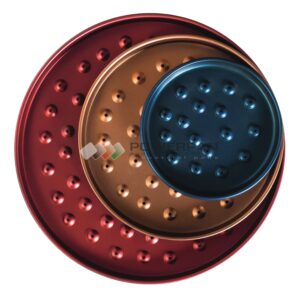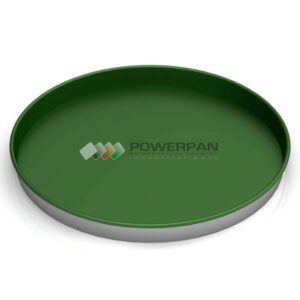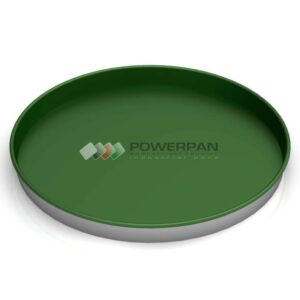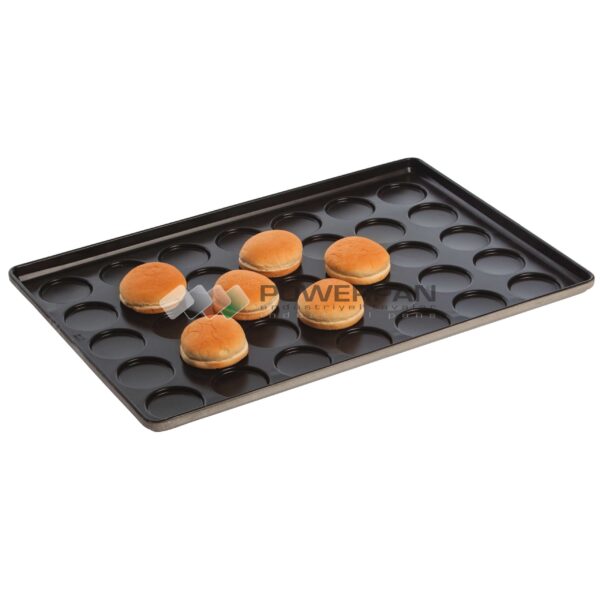
An aluminum solid baking tray supports all the dough on a continuous surface. Unlike a perforated tray, it has no openings in the base. This structure can be considered for work ranging from individually placed products such as cookies and poğaça to dough spread across the tray. The dough’s spreading behavior and need for an edge matter more in selection than the product name.
What a solid base means in production
A continuous base eliminates the problem of soft mixtures passing through holes. On its own, however, it does not establish the same color or degree of baking at every point. Assess oven airflow, rack position, product spacing, and dough load together. Mixing different portion weights on the same tray makes baking results harder to compare.
When choosing tray size, distinguish usable internal area from external dimensions. Rolled edges affect seating on rails and handling; they can reduce the internal area. Also check passage through the oven door, cart rails, and stacking without trays touching one another before ordering.
Use limits for a PTFE surface
A PTFE coating is considered to help dough release from the surface. Recipe, surface condition, and conditions of use still matter. The coating name does not establish suitability for every oven type or temperature. Clarify the selected system’s operating conditions through product technical information.
Avoid holding an empty coated tray at high heat. BfR’s guidance on PTFE equipment also advises against overheating. This general warning does not replace temperature approval for a particular Powerpan model.
Ordering and daily maintenance
- Share edge height and oven rail information along with external dimensions.
- Specify dough type, the greasing method used, and the cleaning routine.
- Do not change production settings before trialing the new surface with your own recipe.
Do not cut with a knife, scrub with steel wool, or scrape with a metal spatula on the coated surface. Let the tray cool, then wash it with a suitable cleaner and dry it. If warping, coating lift, or repeated sticking in the same spot occurs, set the tray aside for inspection. The decision to recoat depends on body condition, not surface aging alone.