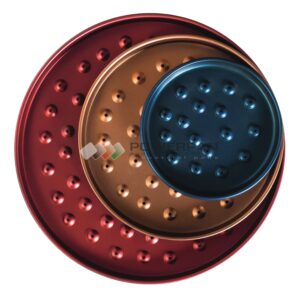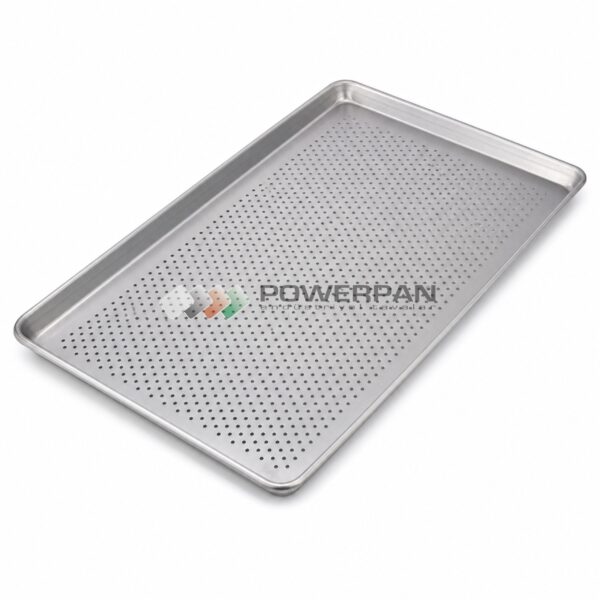
An aluminum perforated baking tray is used to produce simit, açma, and similar products on a surface that leaves open passages beneath the dough. The aluminum body and perforated base are two separate choices: the body affects handling and heating behavior, while the hole layout affects dough support and airflow at the base. Neither alone guarantees a crisp base or a short baking time.
Assess dough and hole layout together
Select hole diameter and spacing according to dough consistency. Soft dough may sag into holes; heavy flouring or accumulated dough residues may block the openings. Looking at base impressions, release from the tray, and visible color differences in a sample bake is more informative than deciding from a catalog photograph alone.
If simit and açma are to be made on the same tray, trial each product separately. Sesame seeds, egg, or oil used on the surface also change cleaning needs. Lining a perforated tray with paper changes how the dough contacts the surface and how the holes function; conduct a separate production trial for this practice.
Body and coating checks
External dimensions, the edge that sits on oven rails, and base flatness are basic order information. Do not assess lightness using an empty tray alone; also examine holding, withdrawing from the rack, and stacking a dough-loaded tray. Specify alloy and sheet thickness in the selected product’s technical description.
- Check that hole edges have no burrs or sharp protrusions.
- Request the coating system’s operating temperature and cleaning conditions in writing.
- Confirm contact between oven cart rails and tray edges.
- Record base color and release behavior in a trial using the same recipe.
Maintenance that keeps holes open
Remove residues from a cooled tray with a soft brush suitable for the coating. Do not try to enlarge or scrape openings with a metal point. Detergent, machine washing, and soaking conditions must follow the body and coating instructions. Set aside trays showing peeling, sharp damage, or pronounced bending for assessment.
A request prepared for Powerpan can include existing tray dimensions, product type, dough consistency, and oven information together. This allows the choice of a solid or perforated surface to be based on the facility’s actual baking conditions rather than an assumed performance percentage.