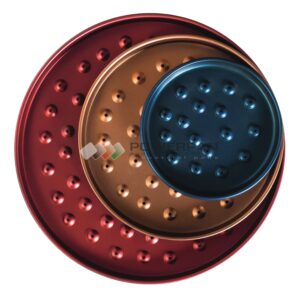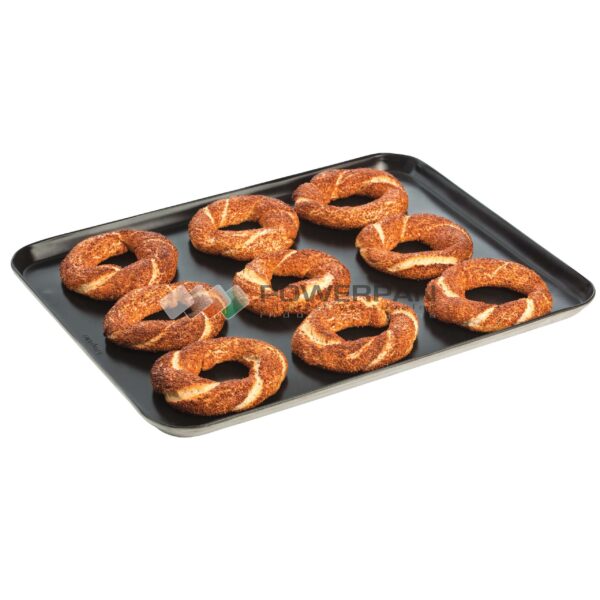
Select a perforated simit tray together with the target base texture and the oven used. A perforated surface is a handling and baking structure containing openings. Results depend not only on the holes but also on dough recipe, oven program, and layout.
In a product request to Powerpan, share simit dimensions, dough weight, and production method. Match the tray’s external dimensions to the oven rack or conveyor. Assess how many products it can carry using a layout that prevents contact as they expand.
Holes and the contact surface
Inspect opening size and pattern alongside the metal areas contacting the product. The applied coating must not adversely affect hole function. Checking hole edges and base shape differs from looking only at the surface’s overall appearance.
A perforated surface cannot be said to guarantee a crisp base for every recipe. Likewise, a solid tray does not always mean a soft base. Keep the same recipe and oven conditions in comparisons; observe the product base and release behavior separately.
Sesame seeds, poppy seeds, and cleaning
Particles left on the surface and around holes require cleaning. A coating does not guarantee that all residues will be prevented from adhering. Cleaning tools must reach the openings without damaging the surface with stiff wire or scrapers.
- Dough, product dimensions, and layout.
- Perforated surface requirements and external dimensions.
- Oven type, program, and handling system.
- Release agent, cleaning, and existing surface damage.
Assess operating limits for PTFE-based or other systems through technical information. General temperature figures must not be applied to every tray. Food contact suitability also requires separate consideration for the selected system and intended use.
If the tray is supported at its edge during handling, inspect that area’s shape and damage. A perforated base appearing sound does not mean the handling edge is suitable. In a refurbishment request, sharing edge and corner photographs alongside a base photograph helps assess body condition more fully.
Follow manufacturer instructions for first use; do not apply the same greasing or preparation process to every coating. When refurbishing a used tray, inspect body integrity, hole edges, and deformation. Remove the tray from production if peeling occurs. Define order and delivery scope after confirming the current hole pattern and size options.