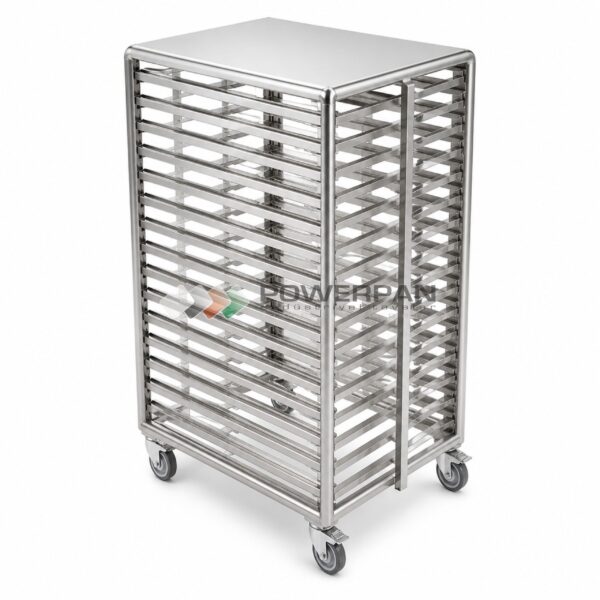
Selecting a hygienic oven trolley starts with surfaces that can be cleaned and inspected. A stainless steel body, smooth joints, and an accessible rack arrangement matter in this assessment. The name hygienic does not mean that equipment automatically prevents bacterial growth or meets every audit requirement.
Areas reached and missed during cleaning
Examine rack supports, areas around welds, wheel attachments, and gripping points together. Enclosed areas where cleaner and rinse water collect can complicate the facility’s maintenance plan. A shiny outer body alone does not show that these areas are easy to clean.
The washing area and method to be used for the trolley are also selection information. Check that chemicals used are compatible with materials and components. The name stainless steel does not guarantee resistance to every cleaner or all environmental conditions. Separate technical information may be needed for wheels and connecting parts.
Rack and operating area fit
Assess tray edge profile, rack spacing, and product height together. If the trolley will enter an oven, confirm temperature suitability for components other than the body as well. Equipment used only for storage and transfer must not be selected under the same conditions as a trolley entering a hot oven.
- Share the washing method, cleaner, and drying arrangement.
- Check access to joints and beneath racks on the sample.
- Specify tray dimensions, edge profile, and product height.
- Inspect residue and water accumulation around wheels.
Read document scope correctly
A management system certificate does not replace product approval for a specific trolley. ISO’s explanation of conformity assessment distinguishes management system certification from product certification. Assess materials, operating conditions, and the product’s technical documents separately when ordering.
On-site inspection must cover visible residue and component condition after cleaning. If damaged welds, worn wheels, or deformation causing buildup are found, separate the trolley for inspection. When submitting a request to Powerpan, describing cleaning practices and the equipment’s working area instead of using only the word hygienic makes suitable design assessment easier.