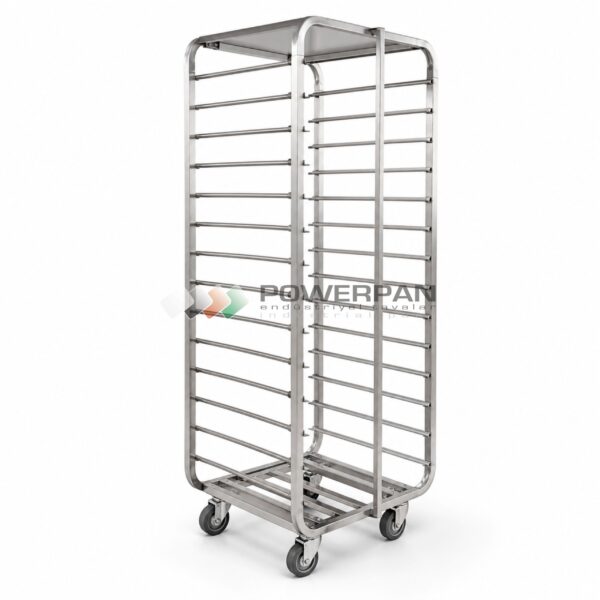
A rotary oven trolley is equipment that carries trays as part of the oven’s rotating arrangement. It is not evaluated under the same conditions as a trolley used only to store trays. The oven’s connection and support system affects selection, from the trolley’s overall dimensions to its shelf layout.
Define the oven connection first
The oven model, connection design, and how the trolley is supported during operation should be clear. Different arrangements, such as a top connection or support from below, do not mean the same trolley body fits every oven. A central shaft should not be considered a shared feature of all rotary ovens either.
The oven manufacturer’s trolley dimensions, connection drawing, and photographs of the existing trolley can be added to the technical request. Check passage through the oven door and rotational clearance inside separately. An empty trolley seating in position is not sufficient evidence that it will rotate without problems under load.
Select shelves, load, and wheels together
Rail spacing must accommodate the tray edge and product height. Increasing shelf count does not increase daily output in the same proportion; spacing between products and oven conditions must be maintained. Use the total weight, including dough and trays, when evaluating load balance.
- Share the oven model and connection cross-section.
- Specify tray overall dimensions, edge profile, and product height.
- Explain the operating load and how shelves are filled.
- Clarify whether wheels operate in the oven or only within the facility.
- Measure door thresholds and the handling route.
Temperature limits for wheels, bearings, and connecting components must be verified through their own technical documents. A stainless steel body does not show that these parts suit the same temperature. A particular load or rotational speed should not be assumed without a product code either.
Trial and maintenance
Acceptance checks examine positioning, connection seating, and loaded movement together. If vibration, rail damage, or strain at a connection occurs, remove the affected trolley from service for assessment. Consult the equipment’s technical specialist rather than having the user change the connection design.
Include shelves and joints in the cleaning plan along with the areas around the wheels. A request to Powerpan should not be limited to the general rotary trolley name; oven and tray details should be presented within the same technical scope.