
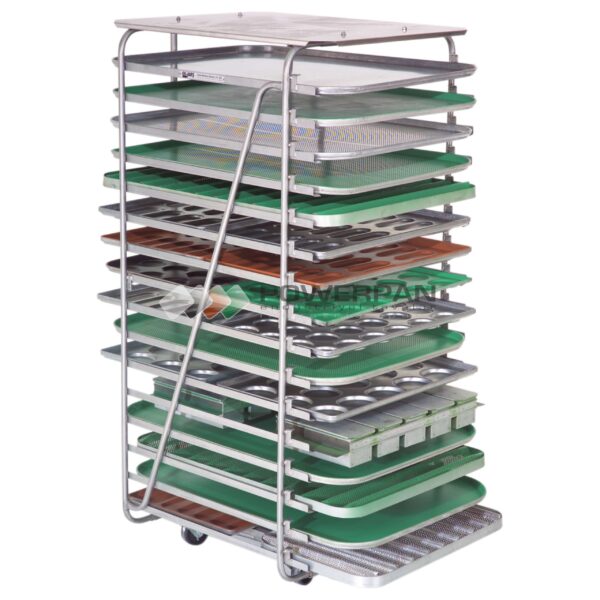
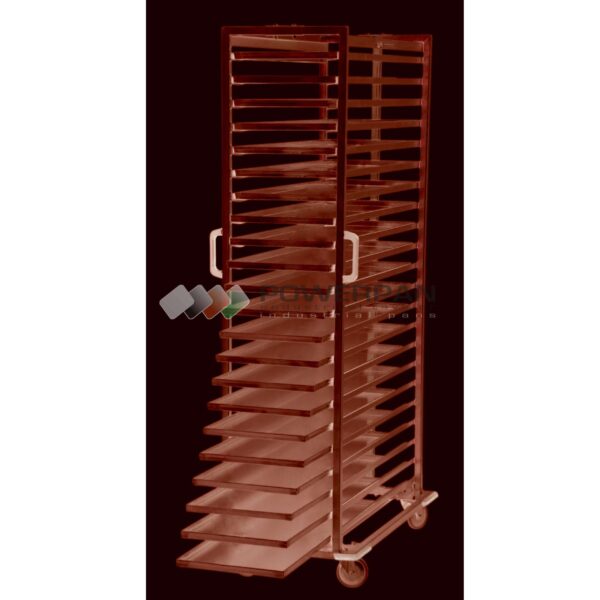
Transport trolleys move pans, trays, and products between bakery work areas. Platform carts, tray racks, and application-specific carriers support different loads and should be selected for the route and handling task.
Describe what is being moved
Provide the tray footprint, stack arrangement, product clearance, and intended load. Shelf count alone does not establish capacity. Supports and retaining features should match the actual pan edges and loading method.
Check the route
Doorways, corners, floor transitions, washing areas, and storage space affect the equipment brief. Casters, brakes, handles, and frame construction need to suit the duty. A transport-only trolley should not be taken into an oven because it carries oven trays.
- Identify the starting and destination workstations.
- Describe hot, wet, or other relevant exposure.
- Provide loading and unloading details.
- Confirm the required load and fit specification.
Inspect existing equipment for damaged supports, joints, wheels, and distortion. Cleaning and maintenance need to address the complete trolley, not only visible panels. Confirm suitability from the agreed design rather than assuming that a familiar material or a larger platform guarantees an appropriate load rating.