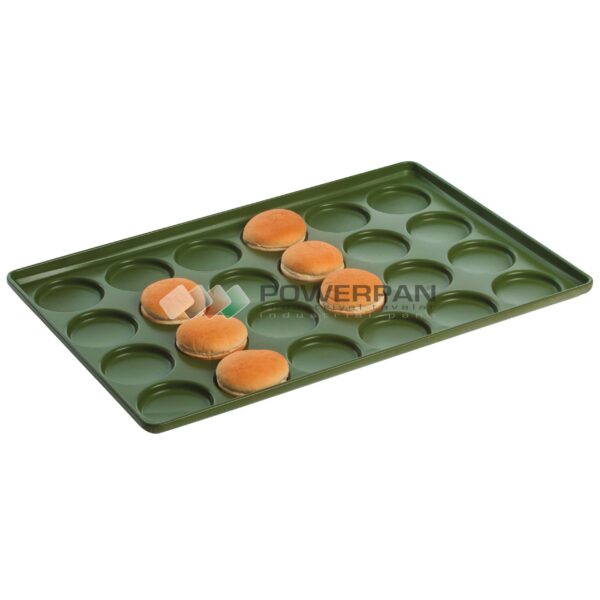
A mini bread pan is a multicavity mold used to bake small round breads in separate cavities. For this form, chosen for breakfast service, small sandwiches, or individual bread portions, determine finished product dimensions before the number of cavities. Small bread can mean different portions at different facilities.
Cavity size is not finished bread size
The cavity’s internal diameter and depth define the space for dough inside the mold. The top surface that develops during proofing and baking may form a different cross-section beyond those limits. The mold diameter and the widest point of the finished bread should therefore not be treated as the same measurement.
For an order targeting an 8-10 cm cavity size and an 8-12-cavity layout, the drawing should specify where the selected diameter is measured and how the cavities are arranged on the tray. These values are not a fixed model or baked-product standard for every mini bread pan. Spaces between cavities, the outer edge, and gripping areas are also part of the layout.
Fill control for small portions
A difference in dough quantity in one cavity may make mini breads look noticeably different at service. Weighing dough pieces and rounding them similarly makes comparison easier. Increasing the cavity count does not always mean producing more acceptable products in the same oven; the loading arrangement and baking result require separate trials.
- Compare the fill in all cavities and their appearance at the end of proofing.
- Examine underside color in breads from edge and center cavities.
- Check that bread releases intact and without marks on its base.
- If the bread will be cut for service, test its suitability for the filling.
Using the same recipe and filling method during trials is important. If sticking occurs in only some cavities during removal, examine dough distribution, surface residues, and cavity shape together. Changing the use of the whole mold or coating type before identifying the cause can be misleading.
Service and daily care
Assess mini breads during cooling, separation, and packaging as well. A product that looks good on a plate may not have sufficient base height when cut for a small sandwich. Prepare the target sample in the actual serving format for this reason.
During cleaning, inspect the base and wall junction of every cavity. Use the manufacturer’s recommended method instead of scratching the coating to remove stuck pieces. Set damaged pans aside; store clean, dry molds so their surfaces do not rub against one another. Share the target portion, nominal cavity size, and external tray dimensions accepted by the oven together in the quotation request.