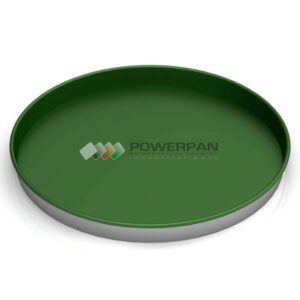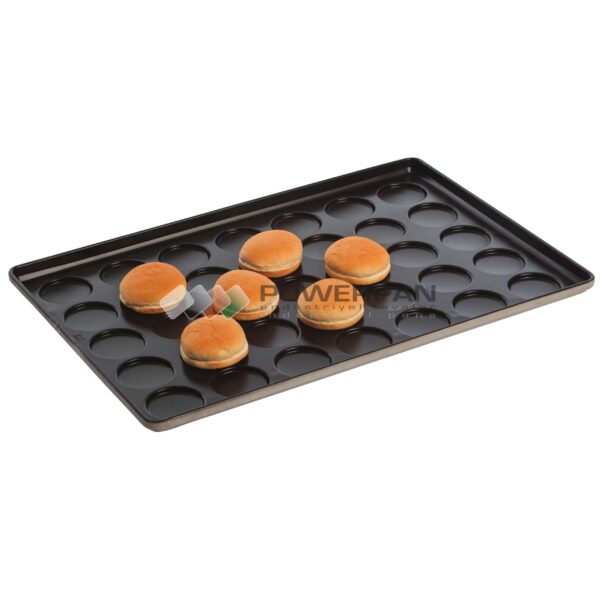
In bread roll production, a round-cavity pan can be considered for baking individually portioned dough in a defined shape. The name roll does not require a round form for every bread. Cavities limit the area in which the product spreads, while finished bread height and texture are also affected by the recipe and production conditions. Share the intended product shape and dough information together when selecting equipment from Powerpan.
A pan for hamburger buns or round sandwich bread is not selected by cavity diameter alone. Cavity depth, base slope, and layout between cavities also matter. External dimensions must suit the oven shelf or conveyor; assess contact with handling and removal systems separately.
Matching dough weight to geometry
The same mold may give different results with different dough weights. Fermentation conditions and the baking program also affect product shape. Do not infer the exact finished bread diameter or volume from nominal cavity dimensions. Sample assessment should represent the actual recipe.
Some cavities in a multicavity surface may require more mechanical intervention. If edge damage recurs, examine the removal device or alignment. A new coating does not automatically correct pan distortion or a line adjustment problem.
Coating and scope of use
For a PTFE-based system or other options, include operating and cleaning conditions in the technical assessment. A fixed temperature or service life in years should not be applied to every pan. Address food contact compliance through documentation for the relevant system’s scope of use.
- Target product, recipe, and dough weight.
- Cavity shape, depth, and required external dimensions.
- Oven type and product removal method.
- Cleaning, release agent, and stacking conditions.
Perform cleaning and any preparation before first use according to the selected system’s instructions. Do not assume a common treatment such as greasing and holding in an oven for every coating. Product release and surface residues can be monitored in the first batch.
Distinguish opening, base, and depth when describing cavity dimensions. A single diameter does not describe the full cross-section of a tapered or curved cavity. If the aim is to produce the same product as with an existing pan, compare the cavity cross-section and base shape rather than sending external dimensions alone.
If a used pan will be refurbished, inspect the body and cavities separately. Remove a peeling pan from production for examination. Clarify order scope and delivery planning after confirming cavity count and dimension options with the current product drawing.