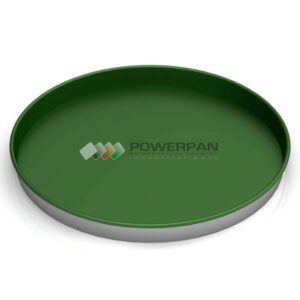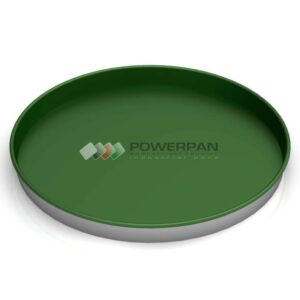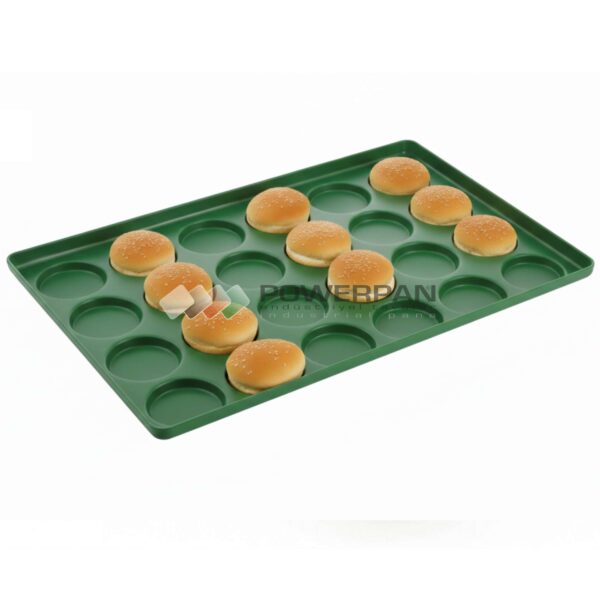
A medium hamburger pan is a multicavity mold used to produce hamburger buns in round cavities. An 11 cm diameter target may be useful starting information for product development, but cavity diameter and the widest point of a baked bun are not the same. Selection should account for the patty, filling, and serving arrangement the facility will use.
Cross-section matters as much as diameter
The base, cutting height, and top shape of a hamburger bun meet different needs. The round cavity guides the dough’s lower and side boundaries, while the domed top develops through the recipe, shaping, and proofing. The mold name alone does not promise a particular bun texture or dome height.
An inquiry for 11 cm should state whether the measurement refers to the cavity opening, base, or finished bun. Include depth and wall profile in the drawing as well. This prevents two molds with similar diameters but different volumes from being mistakenly treated as equivalent.
Trials in multicavity production
Keep dough piece weights and rounding methods similar so the cavities can be compared. Assess buns from different areas of the pan together. Good results in the center cavities do not show that the edge cavities also produce the same shape and color.
- Examine how dough fills the cavity boundary at the end of proofing.
- Measure baked bun base diameter and top width separately.
- Check for base tearing or edge marks during removal.
- Assess the functional balance of bottom and top portions after cutting.
Separating a hamburger bun into two portions is generally a cutting operation after baking. Do not assume that a round-cavity pan molds the top and bottom separately. If a special divided design is required, show it in the drawing as a different product requirement.
Service and equipment compatibility
Test a sample bun with the actual filling. A patty extending beyond the bread, a base falling apart on contact with sauce, or packaging that will not close are problems that diameter alone does not reveal. Accept the mold under the conditions in which the facility will serve the product.
Specify external tray dimensions, cavity count, and oven support arrangement together in the quote. Describe the dough and surface topping operations for coating selection. Clean residues in the cavities according to the manufacturer’s instructions; set pans with damaged surfaces aside. Compatibility with a particular restaurant chain or a universal hamburger standard should not be presented as a product feature without a separately verified specification.