

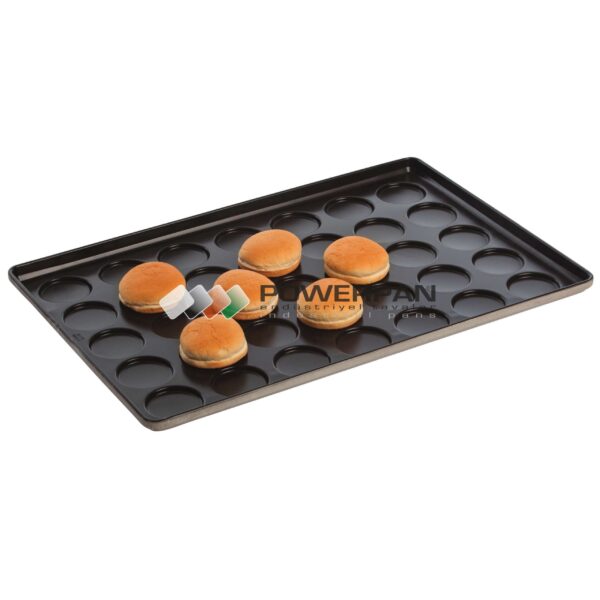
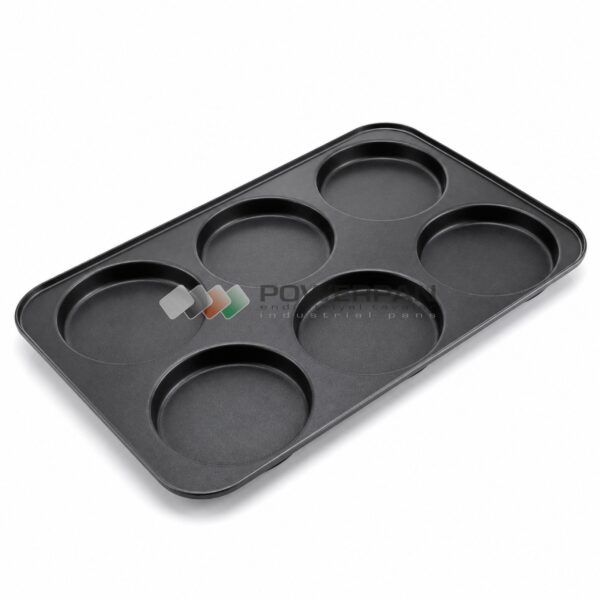
Hamburger tray sizes describe both the cavities for individual buns and the tray that carries them. Small, medium, large and jumbo labels do not define a universal measurement. Specify the required bun shape and the equipment fit before comparing designs.
Define the bun, then the cavity
Record the target diameter, height and base profile, along with dough weight and recipe information. Proofing and baking affect the final shape, so cavity diameter is not a guarantee of the finished bun diameter or weight. A reference product can help make the requirement clear.
Check the layout and external dimensions
Larger cavities may change the number and spacing that fit within a tray. Confirm the proposed arrangement on a drawing rather than assuming a fixed cavity count for each size label. The rim, reinforcement and outer footprint must also suit racks, ovens and handling systems.
- Distinguish cavity measurements from tray measurements.
- Identify loading, cooling and release methods.
- State which dimensions must match the existing line.
- Include cleaning and food-contact documentation requirements.
Select the pan and surface together
Material and coating should be assessed for the intended operating conditions. A non-stick surface cannot correct a cavity that is wrong for the product. Where an existing design is being replaced, explain the reason for the change and compare the proposed drawing with a reference pan before assuming interchangeability.