
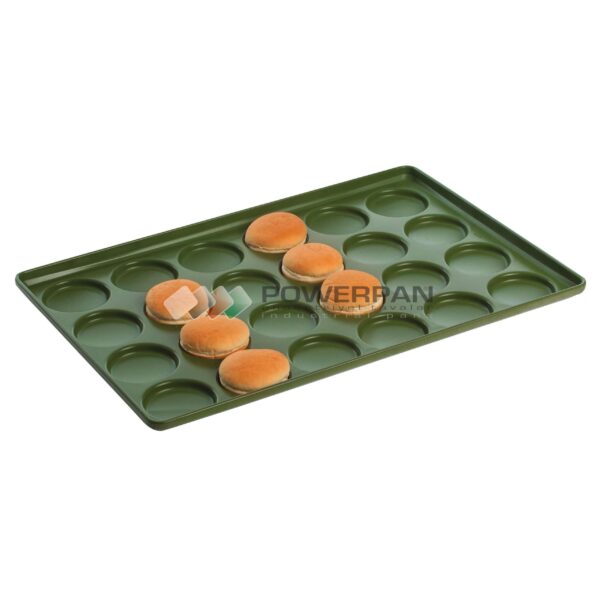
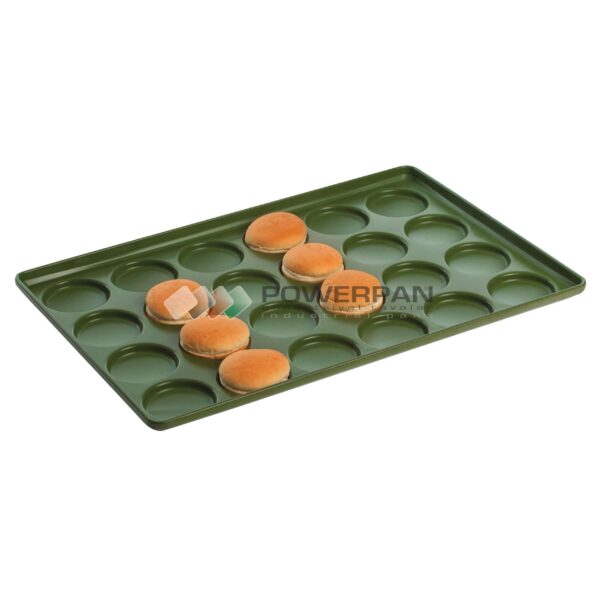
Big burger trays concern larger-format burger buns, with cavities intended to support the required round shape during production. The term “big” does not establish a single diameter, portion weight or cavity count; the design needs to be defined for the product.
Specify the finished bread requirement
Describe the intended bun diameter, height and base profile, and include the dough weight and recipe. A larger cavity alone does not determine the final baked dimensions. Proofing, loading and baking need to be considered alongside the pan geometry.
Consider layout before assuming output
More space for each bun can affect cavity count and spacing within the available tray footprint. Confirm the proposed layout against the oven, rack and handling equipment. A large-bun format should not be treated as a promise of a particular batch capacity.
- Provide a drawing or reference product.
- Identify the outer tray dimensions and rim requirements.
- Describe how buns are loaded, cooled and released.
- Include cleaning conditions and the intended coating requirement.
Review surface performance in context
A suitable coating is one part of the pan specification. Assess it for the substrate and operating routine, with documentation relevant to food contact. For an existing tray, record sticking and visible damage and inspect the body before requesting renewal. The product brief should concern the bread and process, not an assumed marketing label such as XXL or a fixed lifespan claim.