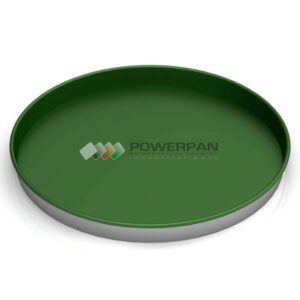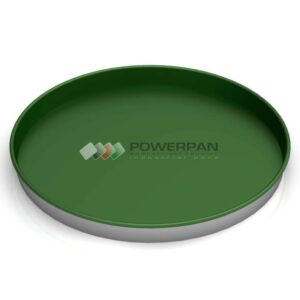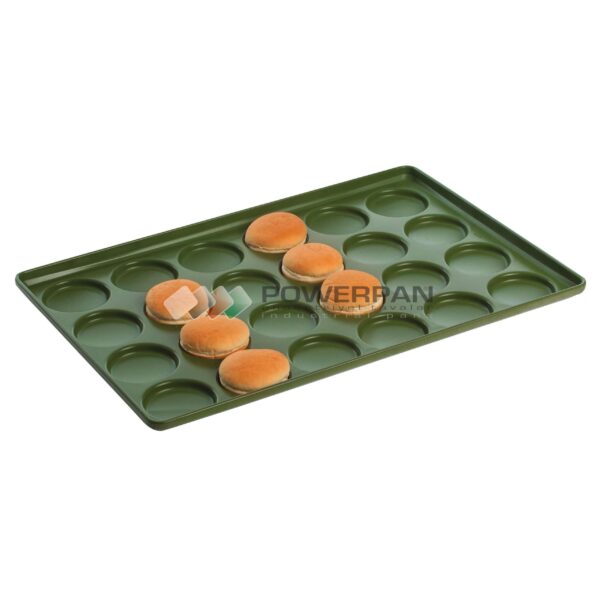
A jumbo burger pan is assessed for producing hamburger buns in large round cavities. Names such as jumbo, large, and big may not describe the same dimensions at different facilities. Prepare the request with target baked bun diameter and height as well as the name used on the menu.
Translate menu dimensions into mold dimensions
A cavity’s inner diameter defines the space for dough; it does not, by itself, show the finished bun’s exact diameter or the dough weight required. Test the recipe, shaping, and proofing together. If a large bun will be made simply by increasing dough quantity for a standard product, check how that change affects baking and slicing.
Assess the serving patty’s diameter, thickness of the bun’s top and bottom pieces, and packaging closure together. A wider cavity does not guarantee the ability to hold a particular number of patties or provide a sufficient portion for one person. Slice the sample bun and test it with the actual filling arrangement.
Match the pan layout to the product
Cavity count and spacing determine access for filling and surface applications. A pan with large cavities may require a different layout within the same oven dimensions. Products must not become too close after proofing; check the space between them during the trial. Match outer tray dimensions to trolley rails as well.
- Specify inner cavity diameter and depth in the technical drawing.
- State dough load and target baked bun dimensions separately.
- Share filling, proofing, and unmolding methods.
- Add serving package and slicing dimensions to the request.
Use the same recipe and oven position in comparative production. If color or size differences appear, examine variables individually. If the recipe and program change at the same time as the mold, it becomes difficult to separate which factor caused the result.
Surface selection and monitoring
Select the coating according to dough and operating conditions, not the jumbo menu name. Clarify system operating temperature and washing limits through written technical information. Do not assume no sticking, long service life, or compliance with a particular commercial brand standard.
Clean cavity bases and edges with suitable tools. Separate and inspect pans with damaged coating or distorted cavities. Providing dimensions, recipe, and a serving sample together in a request to Powerpan allows the large round mold to be matched to the facility’s product.