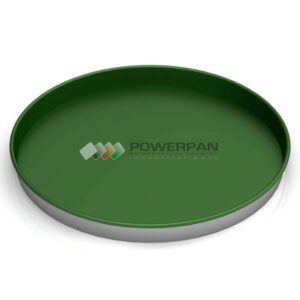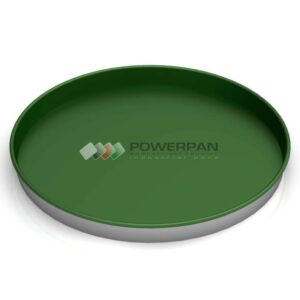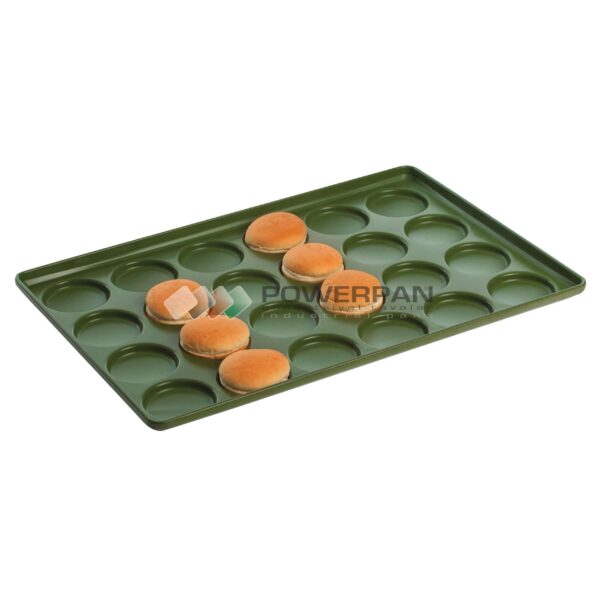
Large burger bun trays are molds for producing large-diameter hamburger buns in round cavities. The wide-cavity structure is evaluated against the large bun shape intended for the menu. Names such as XXL or mega are not a shared technical standard; the order must be defined by actual dimensions and finished product goals.
How a larger diameter affects production
Increasing the diameter changes more than the bread’s visible area. Dough spreading within the cavity, reaching the intended height, and slicing after baking must also be reassessed. Applying the dough weight and program used for a small bun without changes does not establish that the large shape will form properly.
In a serving trial, check how the bread works with the patty and other ingredients being used. The tray alone does not guarantee support for a particular number of patties or that the bread will hold together under the filling. Decisions can be based on measurements of finished bun diameter, slicing height, and fit inside the package.
Cavity layout and working space
Large cavities change the tray layout. Examine cavity count and spacing together, preserving oven air circulation and access for filling. Total output from a multicavity tray is not calculated from cavity count alone. Baking, cooling, and depanning are also part of the daily operating plan.
- Specify the intended baked bun diameter and height.
- Share the shape of the menu filling and packaging dimensions.
- Explain the dough recipe, filling arrangement, and proofing process.
- Examine center baking, base color, and slicing behavior in the sample.
Separate coating selection from menu names
Select the coating according to dough ingredients, oven conditions, and the removal method, not names such as large or premium. Whether greasing needs change is determined in a trial with the existing recipe. Outcomes such as no sticking or a particular number of years of service cannot be inferred from a general product description.
Monitor scratches, lifting, and residue buildup at cavity edges. Set aside damaged equipment and have its surface and body inspected. Adding technical dimensions and a serving sample to the term large burger in a Powerpan request makes the production goal easier to understand.