
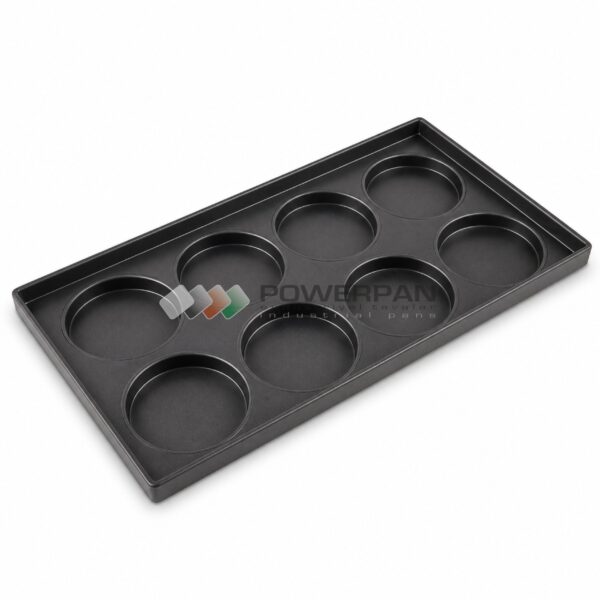
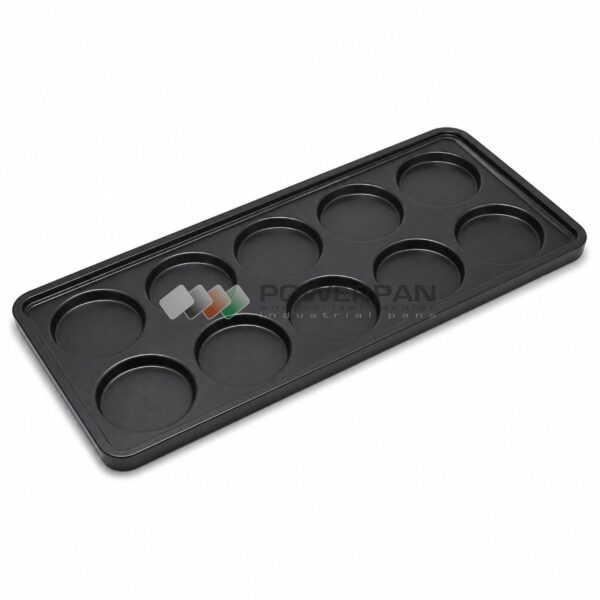
Hamburger bun pans are formed trays for baking the bread used in burgers. The cavity supports the bun profile; it does not necessarily produce separate top and bottom halves. The intended baking and slicing process should be clear in the product brief.
Match the cavity to the bun
Provide the desired diameter, height, dough weight, and appearance. Specify whether the base profile or another feature needs particular control. Proofing and baking still influence the final shape, so a cavity measurement is not a finished-product guarantee.
Review handling and release
Confirm the full pan drawing, including spacing, rims, and support points. Explain how dough is loaded and how buns are cooled and removed. These requirements help assess both the construction and proposed coating.
- Identify compatibility requirements for the production line.
- Describe recipe and operating conditions.
- Record cleaning and stacking contact.
- State the required food-contact documentation.
A repeat order should retain an agreed design reference. For worn pans, inspect body condition and recurring damage before requesting the same treatment again. A coating change may be assessed for release, but it should not be used as a promise of higher capacity or a specified service life.