
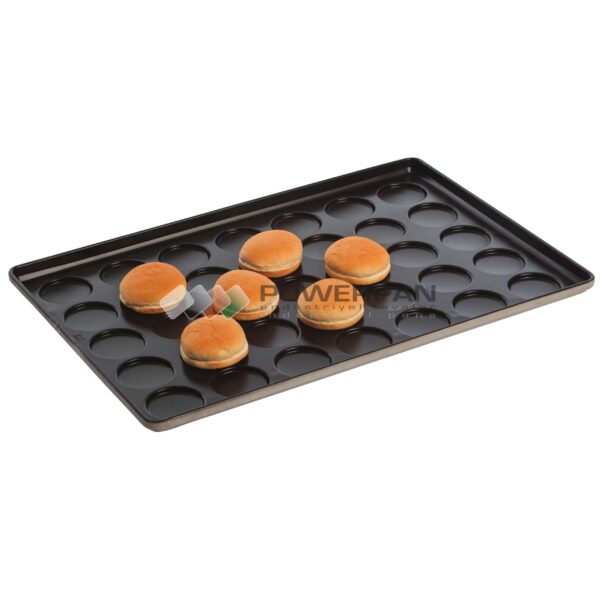
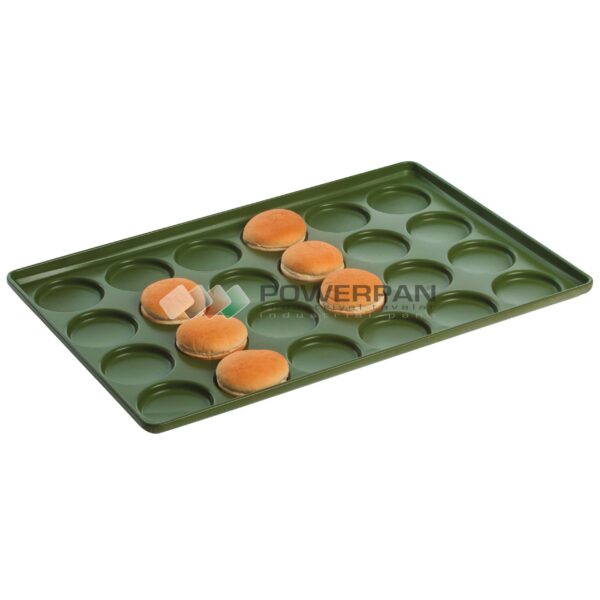
Roll bread pans use formed cavities to support individual bread rolls during production. This category concerns small round bread forms, including roll and mini-pide styles, with the final shape determined by the cavity, dough and process together.
Match the cavity to the finished roll
Specify the desired diameter, height and base profile along with the dough weight and product style. Cavity dimensions should not be treated as a guarantee of finished bread dimensions: proofing and baking affect the result. Distinguish those cavity measurements from the tray’s outer footprint.
Consider the whole cavity layout
The number of cavities, spacing and pan construction need to suit loading and release. Compare the external drawing with racks, ovens and handling equipment. A larger cavity or a changed layout can affect whether a new pan remains interchangeable with the existing inventory.
- Provide the target product shape and dough details.
- Identify the required tray footprint and cavity arrangement.
- Explain how rolls are loaded, cooled and released.
- Describe cleaning and any recurring surface damage.
Choose the coating for the process
The coating needs to suit the substrate and use conditions, with relevant documentation where food contact is involved. It cannot compensate for an unsuitable cavity geometry. For renewal, assess the pan body and formed details before deciding whether recoating is appropriate; damage or distortion may affect the result even after surface treatment.