
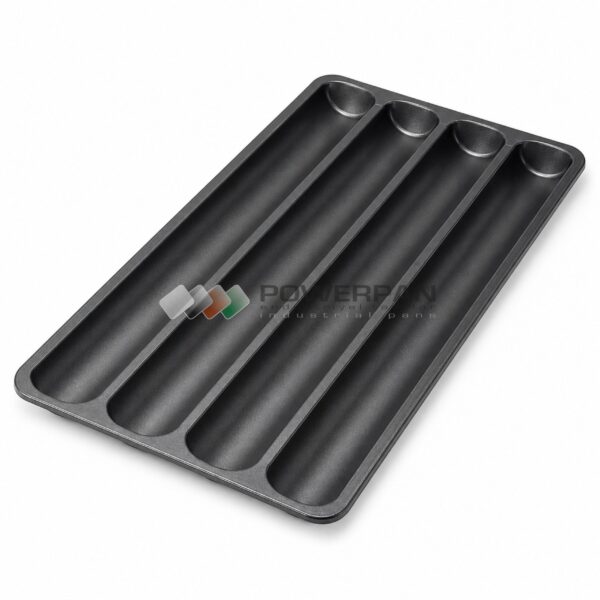
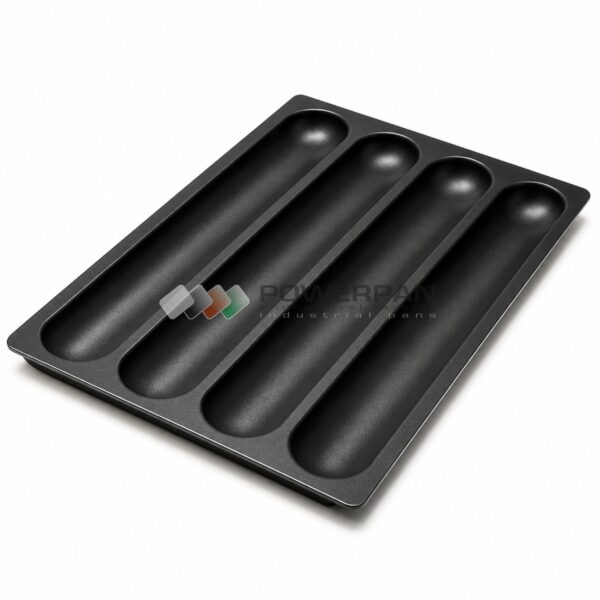
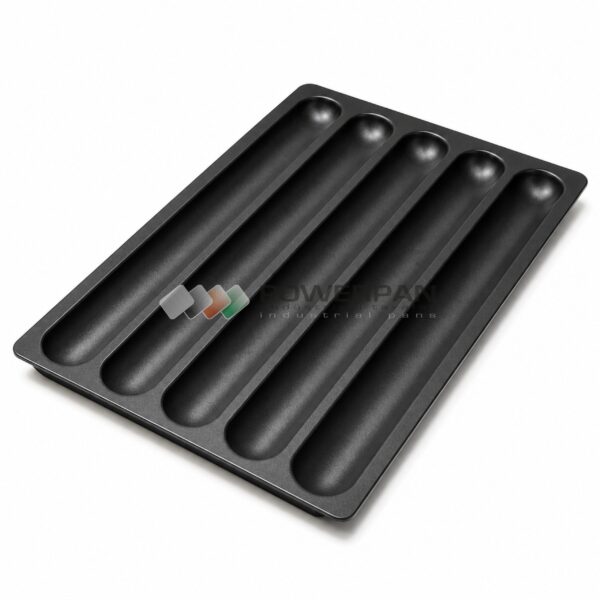
Baguette trays use elongated support profiles for baguette-style bread. Channel width, curvature, spacing, and length need to suit the dough and the handling process; the bread name does not establish a universal tray size.
Match the support to the loaf
Describe the intended loaf length and profile, dough weight, and loading method. A channel should be considered alongside proofing and expansion rather than treated as a guarantee of finished dimensions. Solid and perforated constructions need assessment for the particular product.
Check the complete tray
Overall dimensions, rim details, and reinforcement must fit the oven and racks. Describe how the bread leaves the tray and how the equipment is stacked or transported. A changed channel arrangement may affect compatibility even if the footprint stays the same.
- Provide section and layout drawings.
- Identify the proofing and baking sequence.
- Describe release and cleaning.
- State the coating and food-contact evidence needed.
For renewal, inspect the channels, edges, and body for distortion or damage. Surface treatment cannot restore an unsuitable profile by itself. Confirm the intended system for the operating conditions rather than relying on a general non-stick or crust-quality claim.