
Fast-food bread pan coating
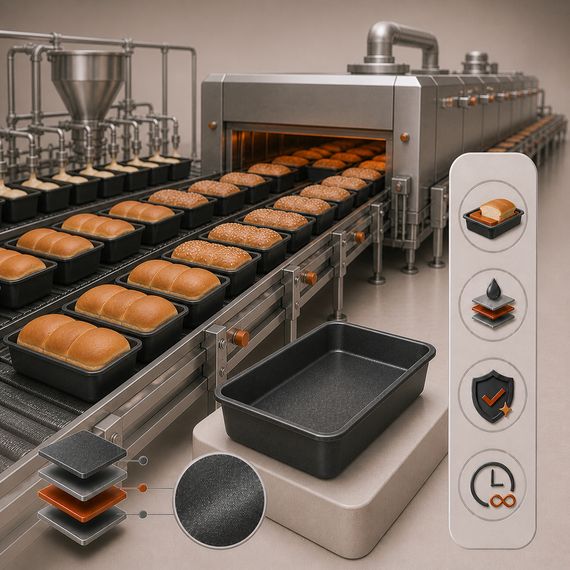
The aim of coating fast-food bread pans is to maintain product shape as it moves along the line and to achieve clean release from the mold. Round hamburger bun cavities, long sandwich molds, and hot dog channels have different geometries. Select the coating with attention to each shape’s dough-contact areas and unloading method.
Reassess surface behavior when the dough’s fat, sugar, or egg content changes. Results from a brioche recipe should not be transferred directly to another bread recipe. Dough weight in the mold, proofing, and baking settings also affect product shape; a coating alone does not standardize dimensions.
Assessing different bread shapes
- Examine the cavity base and surrounding wall together in hamburger bun pans.
- Check the end areas and any lid movement in long sandwich molds.
- Record product marks remaining along the channels in hot dog pans.
- Assess whether narrow details in specialty bread molds can be cleaned.
A tortilla press or directly heated plate is not the same application as a bread baking pan. Identify the heat source and surface temperature separately. Do not assume high-temperature suitability from the name ceramic or PTFE; documentation of use conditions for the selected system is required.
Line compatibility and renewal planning
Information sent to Powerpan should include pan outside dimensions, cavity configuration, metal type, and contact points with the automated carrier. A coating cannot correct a bent frame or damaged connection. Pans from several suppliers should be assessed in separate groups even if they look similar from the outside.
Run trial production with the existing recipe and line settings. Record product left in the mold, bases torn during removal, and cleaning needs together. Including the pan’s position in the oven and service history in the results makes it easier to distinguish surface behavior from line conditions.
Clarifying the order scope
Define areas to be coated, food-contact documentation, acceptance checks, and care instructions during the quotation discussion. Plan spare pan quantities and shipment batches for bulk renewal. Confirm delivery date and price after inspecting the parts. Renewed pans should undergo both a product trial and a mechanical-fit check before returning to production.