
Cake production line coatings and mold surfaces
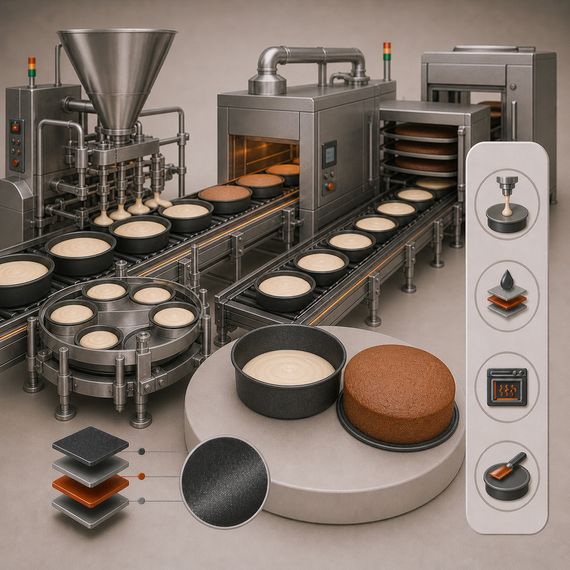
Coating selection on a cake production line is assessed according to how the batter releases from the mold. Removing a thin rolled-cake sheet without tearing and releasing a deep ring cake from its recesses do not require the same surface behavior. Consider the batter’s sugar and fat content, baking program, and product temperature at release together.
When discussing cake mold coating with Powerpan, share the condition of the existing mold as well as the product recipe. If the base is bent, cavities are dented, or connections are loose, a new coating will not resolve these mechanical problems. Grouping molds by use, instead of working with a single coating description for different molds on the same line, provides a clearer technical specification.
Checkpoints by mold geometry
- For muffin and cupcake pans, examine the base, sidewall, and rim of each cavity separately.
- For rolled cake trays, scratches across the broad surface and the edge where release begins are important.
- For detailed shapes such as Bundt, savarin, and madeleine molds, monitor product traces remaining in the recesses.
- Do not assume that transfer trays experience the same temperature and contact conditions as baking molds.
What should a production trial show?
Looking only at the empty mold’s appearance is not enough for a coating assessment. In a trial using the actual recipe, record product release, the amount of cake left on the surface, and loss of shape. Repeated sticking in one cavity may relate to filling quantity or oven position as well as the coating. Compare results by cavity and by pan for this reason.
When discussing PTFE- and silicone-based systems, determine suitability using the technical documentation for the selected formulation. A brand name alone does not explain operating temperature, cleaner resistance, or food-contact conditions. Do not assume that a surface considered suitable for baking can also be applied to a cooling belt.
Connecting the maintenance plan to production
Separate recoating batches by mold type, and put returning pans through a defined acceptance inspection before placing them in production. Select cleaning tools and chemicals that follow the coating instructions. Remove a mold showing peeling from service and notify the quality department. Including mold photographs, a quantity list, baking conditions, and the planned maintenance interval in the quotation request grounds the assessment in a specific usage scenario.