
Evaluating surface thermal performance and baking
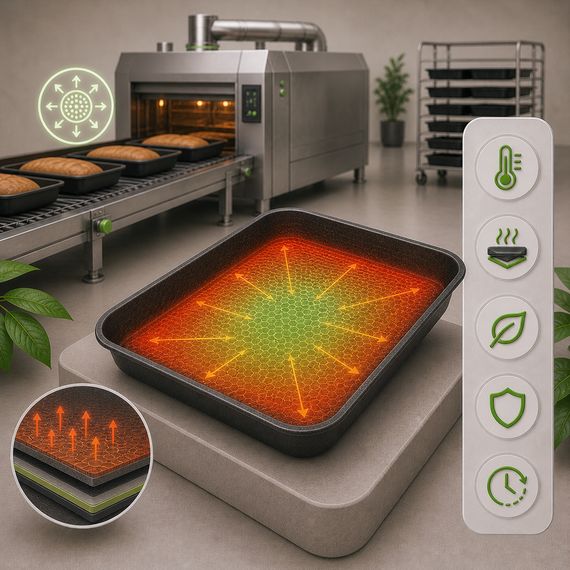
A thermally efficient surface is evaluated through the equipment’s ability to process the required product under suitable heat conditions. Nonstick performance, rapid heating, and even baking are not the same property. A coating request should clearly state the intended outcome; do not assume the surface will solve every thermal problem.
Heat transfer depends on several factors
The metal body, film structure, thickness, and temperature difference are examined together. The U.S. Department of Energy’s heat transfer handbook shows that conduction calculations incorporate both material properties and dimensions. The conduction section of the DOE heat transfer handbook explains this basic distinction.
It is therefore incorrect to use a value for the base polymer as the thermal performance of a finished coated tray. Inferring a single emissivity value from coating color is insufficient as well. System-specific technical data should be matched with the metal body and actual operating conditions.
Measurement according to the application
For an oven tray, product base color and the accepted baking result can be monitored. Record ends and the middle separately in a long mold, and different cavity positions separately in a multicavity tray. In a textile drying drum, drying and surface buildup are different acceptance topics. A food tray result cannot be transferred to a drum application.
- Define the heat source, program, and operating time.
- Record the product load or material being processed.
- Determine temperature measurement points and method.
- Track product quality and consumption results separately.
Scope needed for coating discussions
A part drawing, metal details, and a location-specific record of the current problem can be sent to Powerpan. The request should explain whether the aim is to reduce product buildup or change thermal behavior. Do not state that a particular brand improves temperature distribution or saves energy without a system-specific trial.
Maintain the body and operating conditions during comparison, and record other changes made at the same time. A shorter processing time is not an improvement if product acceptance is not maintained. In food applications, review food-contact documentation separately. Mechanical fit and cleaning checks should also continue after surface refurbishment. A thermal efficiency conclusion must rest on measured operating conditions and accepted product, not general material knowledge.
If product buildup is present, compare a clean starting condition with the used surface separately. Reduced buildup may make product release easier; thermal distribution or energy outcomes require separate evidence. The measurement report should not confuse these two results. Records taken with the same part and program help explain at which operating stage the change occurs.