
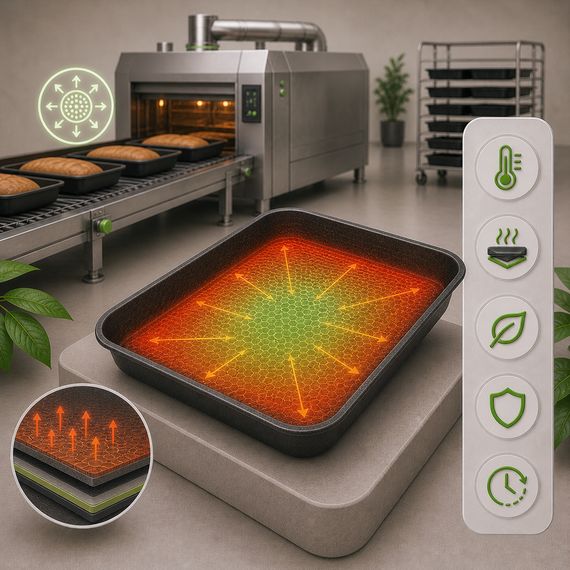
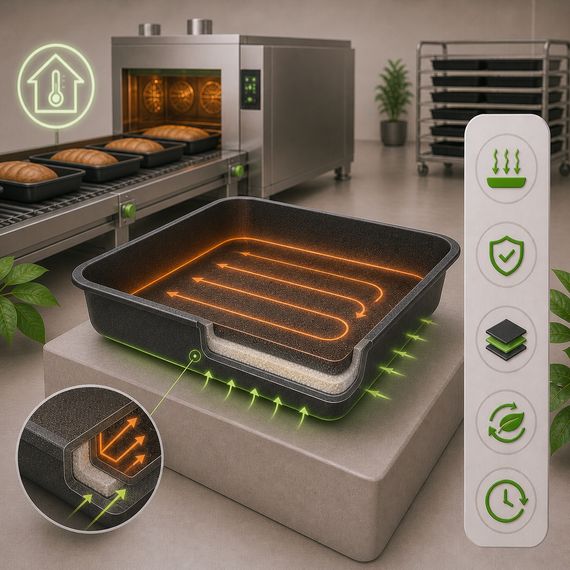
Thermal insulation aims to limit heat transfer through a defined part of an equipment arrangement. That is a different requirement from product release, and it may conflict with the need to transfer heat into food during baking.
Identify where heat should be controlled
Describe the component, heat source, surrounding materials, and intended result. Reducing loss from an external surface is not the same task as changing the working face of a baking pan. A proposed treatment needs assessment within the complete thermal design.
Do not infer insulation from a material name
A thin non-stick coating should not automatically be treated as a substitute for an engineered insulation system. Formulation, thickness, interfaces, and operating conditions matter. Claims about surface temperature or energy savings need evidence for the particular arrangement.
- Provide a drawing showing the relevant surfaces.
- Describe the operating cycle and thermal objective.
- Identify mechanical and cleaning requirements.
- Clarify any food-contact application.
Changes must remain compatible with the equipment’s function and instructions. Where food is heated through the component, evaluate the effect on the process rather than assuming insulation will improve baking. Confirm the technical scope and supporting data before selecting a treatment.