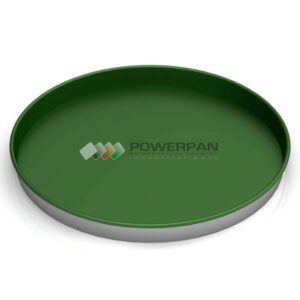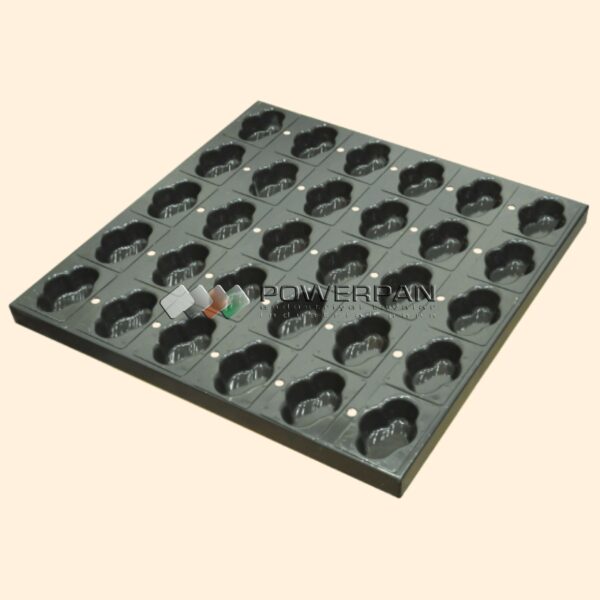
Choosing a professional cake mold begins with cake shape and recipe before considering how many times the mold will be used. A flat base, deep sidewall, or grooved pattern creates different application details. Share mold material, form, and operating conditions together in your inquiry to Powerpan.
In commercial use, a mold experiences repeated contact during handling, cleaning, and stacking. How the internal surface is protected matters as much as a strong body. The term professional alone does not mean a particular capacity, service life in years, or warranty period.
Surface assessment by recipe
Mixtures with different sugar, fat, and egg contents may change release behavior. If the same mold will be used for different cakes, specify those products. Coating selection should not be based only on the cake name or daily production quantity.
Release agent use and removal timing are also part of the assessment. Do not assume in advance that a new surface will eliminate greasing completely. A use trial should represent the facility’s actual recipe and baking program.
Shape and detail inspection
Examine corners in square molds, sidewalls in deep molds, and recesses in decorative molds separately. Excessive layer buildup may affect fine details or dimensions. If an old body has impact damage, corrosion, or deformation, a new coating does not automatically resolve it.
- Mold drawing or internal surface photos.
- Material, dimensions, quantity, and set information.
- Product recipe, baking, and removal method.
- Release agent, cleaning, and stacking conditions.
Assess an order for new molds separately from refurbishment of existing molds. Refurbishment requires body inspection after removal of the old layer. Clarify coating scope, inspection needs, and delivery schedule in the quote.
If a mold set includes different sizes, observe release behavior for each piece separately. Do not assume a large and a small mold will give the same result with the same oven program. Match the set through records of which product was trialed in which mold; carrying the same coating name alone is not enough.
During initial use, observe the cake’s edges, base, and any pattern together. Avoiding cutting inside the mold and the use of hard scrapers helps protect the surface. If coating separation occurs, remove the mold from production for examination. Selection based on actual use and maintenance records is more meaningful than a fixed service-life or savings calculation.