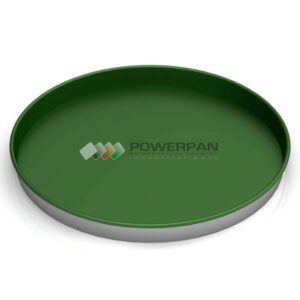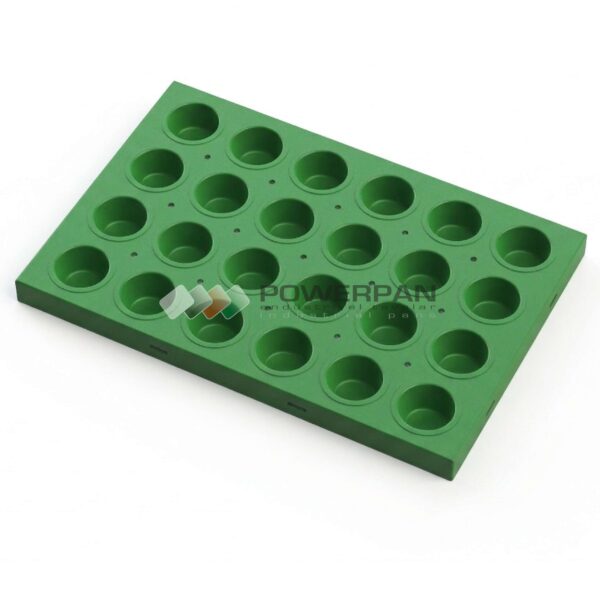
A classic cake pan is used to make a large cake or cake layer in a single round baking area. Unlike a multi-cavity small cake pan, it holds the entire product in one mold. Select diameter and depth together; specify the target layer height in the production request.
Single-cavity dimensions and batter load
Overall diameter and usable internal diameter may differ. Rim folds and wall structure should be visible in the technical drawing. Filling a deep mold completely with batter must not be treated as an appropriate way to reach the target cake height. Fill level is determined by the recipe’s rising behavior.
If layers will be prepared for stacking into a cake, compare mold internal dimensions and finished product heights. If layers will be cut later, include the cutting plan in sample assessment. The mold does not automatically produce a flat top or equal thickness ready for assembly.
Assess the center and edges separately
Looking only at the outer color of a large round product is not enough. Evaluate the center, edges, and base in a way suited to the recipe. Trials with the same fill and oven position make comparison of different molds easier. Do not confuse the effect of a mold change with the effect of the baking program.
- Specify internal diameter and target baked height.
- Share the batter recipe and fill level.
- Explain whether the cake will be served whole or used as layers or slices.
- Check removal, cooling, and cutting methods.
Test serving or cake box dimensions with the finished product too. The outer mold dimensions fitting the box does not establish that the assembled cake will fit. Final dimensions after cream and decoration can be kept separate in the production plan.
Surface care
Evaluate the coating system against batter ingredients and the cleaning routine. If paper or another liner is planned, test release and base appearance with that arrangement. Using a metal knife to separate the product from mold walls or cutting on the coated base can damage the surface.
Clean the cooled mold with appropriate tools; segregate it if body deformation or lifting coating is found. Providing layer and cutting targets alongside the single-cavity round mold description in a Powerpan request helps assess the correct product.