
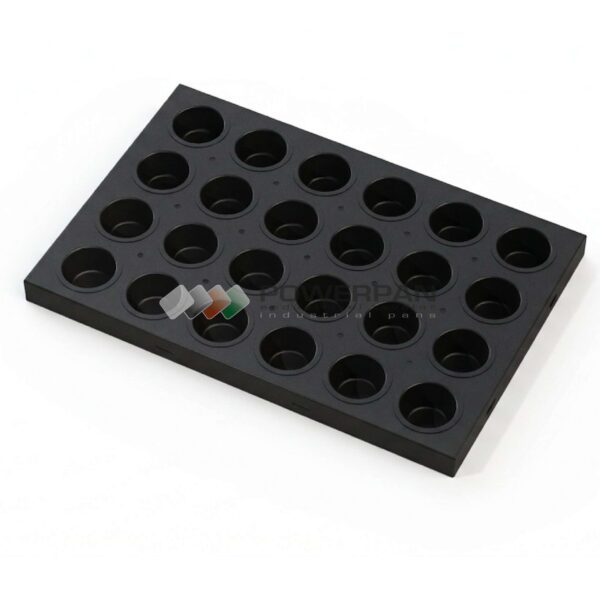
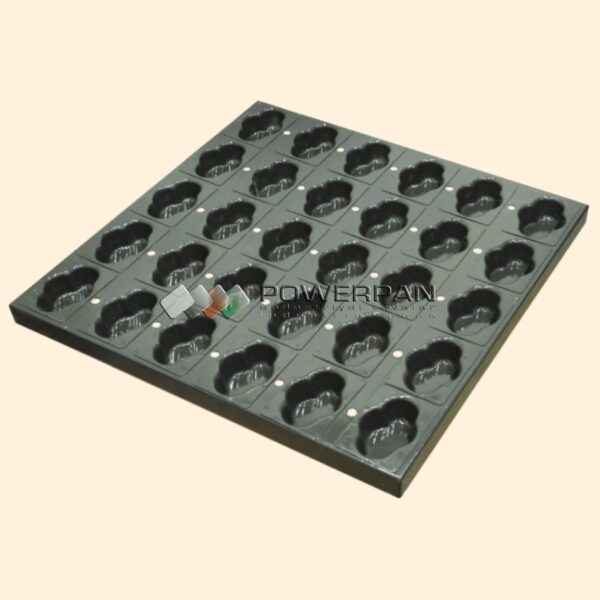
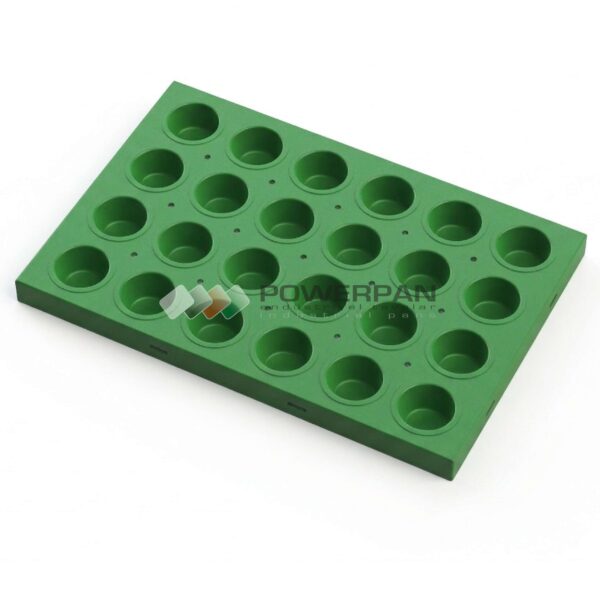
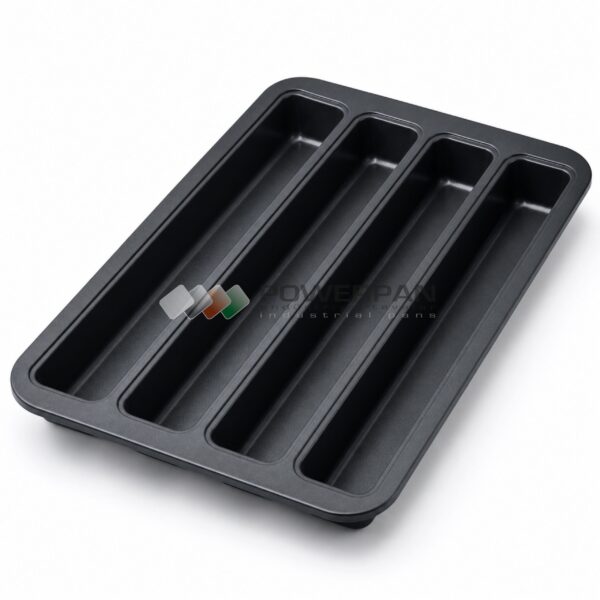
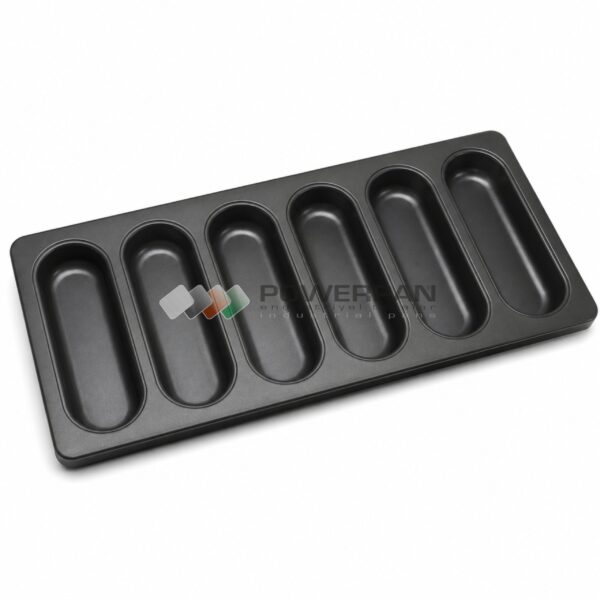
Cake molds define the space in which batter is baked, from simple round or rectangular shapes to more detailed profiles. Their geometry should suit the recipe and production method rather than be chosen only for its appearance.
Specify the cavity and filling
Identify the base dimensions, depth, wall profile, and any central or decorative features. State the batter and fill quantity. Expansion and final shape depend on the recipe and baking process as well as the mold, so dimensions alone do not establish portion weight or yield.
Plan for removal
Explain when and how the cake is released. Corners and deep details deserve review for access, surface treatment, and cleaning. A non-stick finish does not eliminate the effect of unsuitable geometry or a changed demolding method.
- Provide a drawing or reference cake.
- Describe baking and cooling conditions.
- Check the mold’s external fit and handling.
- Include coating and food-contact documentation requirements.
For existing molds, show deposits, damage, and worn areas with photographs. Body condition and preserved shape matter when assessing recoating. A new surface should not be assumed to repair a distorted mold or recreate metal detail that has been damaged.