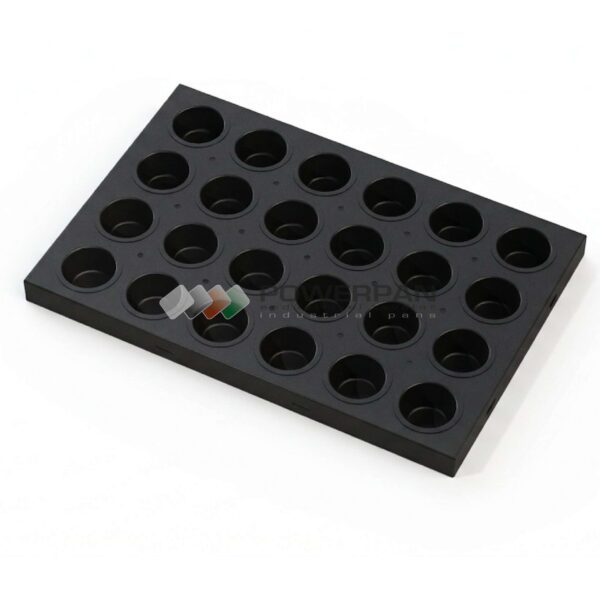
A cupcake pan is a multicavity mold considered for individually portioned small cakes. Whether paper liners will be used matters alongside cavity shape and depth. The names cupcake, mini cake, or muffin alone do not mean the same batter or mold requirement.
In a product request to Powerpan, share the target portion, recipe, and current filling method. External pan dimensions must fit the oven or line; assess cavity layout together with product expansion. Cavity count alone does not determine actual production capacity.
Matching paper liners to metal cavities
If paper liners are used, check how their bases and sidewalls sit in the cavities. Liner dimensions, pleats, and shape after filling matter. A paper liner does not mean that none of the metal mold surface will contact the product or that coating requirements disappear entirely.
Without liners, batter directly contacts the cavity surface. Assess release agent, removal timing, and product delicacy separately. Trials with and without liners must not be treated as the same condition.
Filling and product release
Match filling quantity to mold geometry and the recipe’s rising behavior. A single filling ratio or baking time is not appropriate for every product. Overflowing batter can leave residues between cavities; the cleaning plan must include these areas.
- Target product and recipe information.
- Required cavity form, depth, and external dimensions.
- Paper liner dimensions and filling method.
- Removal, release agent, and cleaning conditions.
Select the coating system based on actual use. Assess operating limits and food contact scope through relevant documents. A mold name or layer count is not evidence of guaranteed nonstick performance or a fixed service life in years.
If filling equipment is used, examine cavity layout compatibility with the equipment’s operating arrangement separately. Two pans with the same cavity count may have different spacing. External dimensions and cavity count are therefore insufficient on their own. Add a drawing showing cavity center positions or a dimensioned photograph of the existing pan to the request.
During first use, inspect the shape and base of products from different cavities. For refurbishment, check the old layer and metal body. Use an appropriate cleaning method instead of hard scraping. Remove pans showing layer separation from production for inspection. Confirm current cavity and size options to clarify order, inspection, and delivery scope.