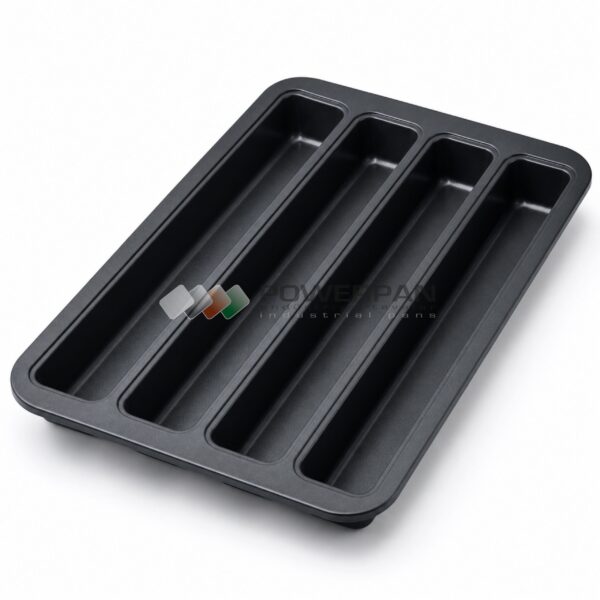
A finger cake pan is a mold used to bake small, finger-shaped rectangular cakes in separate cavities. The long, narrow cavity defines the single-serving product’s shape. Cavities selected for serving with coffee, a pastry display case, or packaged products need not have the same dimensions; serving and packaging goals should be established first.
Cavity size and filling arrangement
Length, width, and depth are evaluated together. A long cavity alone does not establish how much batter it can hold. The recipe’s rise and the desired top shape determine the filling level. Loading the same batter quantity into every cavity of a multicavity pan is a starting condition for comparable baking results.
Check how batter reaches the cavity corners and whether the filling nozzle can access them. With automatic filling, compare cavity center spacing with the machine layout. In manual production, filling the narrow cavities without overflow and carrying the pan in balance are important.
Finger cakes and ladyfingers are different
Similar elongated shapes do not make products identical. A finger cake mold should not be assumed automatically suitable for the recipe or texture of every product sold as ladyfingers. Test the batter to be used together with the intended crust and decorating method. The delicate ends of the slim shape can be observed separately during removal and application of an edible coating.
- Check how the finished product fits inside its packaging.
- Specify cavity interior cross-sections and usable spacing between them.
- Share the filling method, batter ingredients, and decorating plan.
- Record corner color, top surface, and release without breakage in the trial.
Surface and cleaning details
The release coating is evaluated particularly for removing products from narrow cavities. Rather than lifting products at the edges with metal tools, work according to the selected system’s depanning instructions. Check coating condition in all small cavities separately, not just on the flat portion of the tray.
Clean corners and ends of the cooled mold with soft tools suitable for the surface. If paper liners are being considered, retest placement and product shape. When preparing a finger cake pan request for Powerpan, share portion goals alongside the current production method; exact cavity counts and dimensions must be clarified in the product drawing.