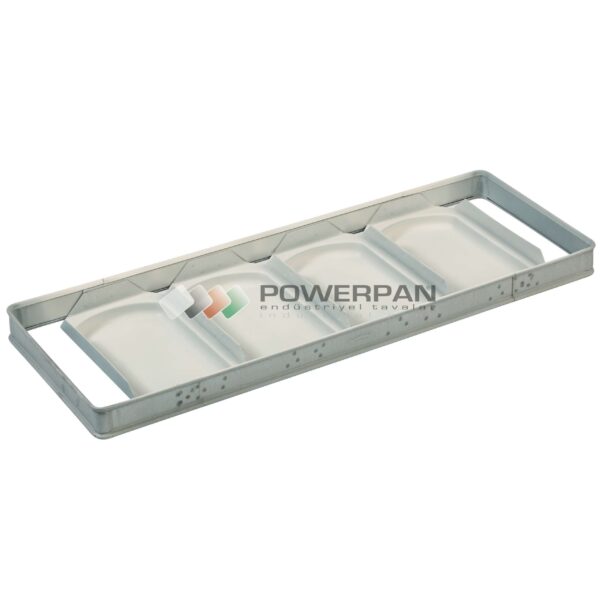
A kumru bread pan is a multi-cavity mold used to bake long oval sandwich loaves in separate cavities. In kumru service, the bread is expected to leave room for filling, be easy to hold, and remain intact when cut. The production target should therefore include behavior at serving, not just the loaf’s appearance straight from the oven.
Define the serving portion first
Filling quantity, how the bread will be opened, and whether it will be packaged or plated affect mold selection. Bread width and cross-section height matter as much as length. Placing filling in a very narrow cross-section can be difficult; an unnecessarily large loaf can change the portion balance planned for the menu. Make the target specific with a sample finished loaf.
The mold’s oval cavity guides the loaf’s lower and side shape. The serving slit is a separate cutting operation; do not assume that an ordinary oval cavity automatically forms a serving channel in the dough. The rounded upper surface also develops through the recipe, shaping, and proofing routine together.
Consistency in a multi-cavity layout
Dough pieces placed in one pan should have similar starting shapes as well as weights. If some collect at one end of the cavity while others spread across the whole base, different cross-sections can result within the same pan. Proofing beyond cavity volume can cause overflow and neighboring products to join.
- Weigh dough pieces and prepare them with the same shaping method.
- Align the loaf’s long axis with the cavity direction during placement.
- Include appearance at the end of proofing in product acceptance criteria.
- Compare loaves from different oven positions.
Assess every product from the pan in the first trial instead of selecting only the best-looking loaf. Record fullness at the ends, underside color, and removal marks by cavity. This makes it easier to distinguish portioning errors from a pan-related problem.
Cooling, cutting, and care
Removing baked bread from the mold and cutting it for serving are separate stages. Perform cutting trials at the cooling stage at which the facility will actually use the bread. Check the base that carries the filling weight, the connection remaining after cutting, and the integrity of the ends.
During cleaning, inspect cavity bases, long sidewalls, and partitions together. If sticking increases, review dough processing, release time, and surface condition together; forcing release with a metal tool is not a solution. When preparing a product request for Powerpan, share existing oven dimensions, a serving sample, and the characteristics of the dough recipe used.