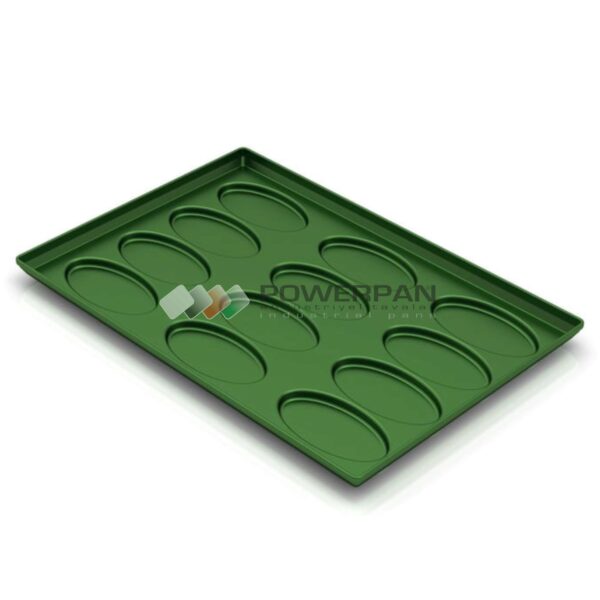
Looking only at loaf length is not enough when selecting a pan for kumru bread. Consider together the width available for filling, the base that must remain intact during cutting, and the space the dough needs while proofing. A kumru pan with long oval cavities keeps dough in separate compartments to help reproduce this shape in production. Bread softness and crust structure, however, are not determined by pan geometry alone.
The oval cavity’s base and sidewalls
A rounded base prevents a sharp corner at the cavity’s narrowest section. Sidewalls limit the area into which dough can spread, while partitions separate products. Partitions do not guarantee that overflowing dough will not touch a neighboring loaf. Adjust dough quantity and final proofing level together with cavity volume.
When comparing a hot dog bun mold, use the actual drawing instead of the product name. Even if two pans have similar lengths, width, base curvature, and depth may differ. A narrow cavity may not produce the cross-section needed for kumru; equally, no single mandatory mold size can be specified for every kumru recipe.
What should sample baking check?
- Does the dough sit in a similar way in each cavity?
- Does it overflow the sides or join between cavities after proofing?
- Do the base and side surfaces reach the desired color?
- Do loaf ends or undersides tear during removal?
- Does the cooled bread suit serving cuts and filling placement?
Perform this assessment with the facility’s actual recipe and oven. A shape that looks good in one trial may not give the same result with another dough quantity or oven load. Adding the pan drawing, dough weight, proofing conditions, and baking arrangement to the sample record makes subsequent orders comparable.
Coating and daily use
When selecting the surface system, disclose enriched dough, egg washing, the cleaner used, and the removal method. A coating name alone does not explain the temperature limit, greasing requirement, or service life. Obtain these details from the selected product’s technical instructions.
During cleaning, separately check dough and topping residue at the ends of oval cavities. Use the permitted cleaning method instead of scraping the coating. Remove pans with peeling or lifting coating from production for quality assessment. For a quotation, share overall pan dimensions, cavity profile, and target finished loaf cross-section together.