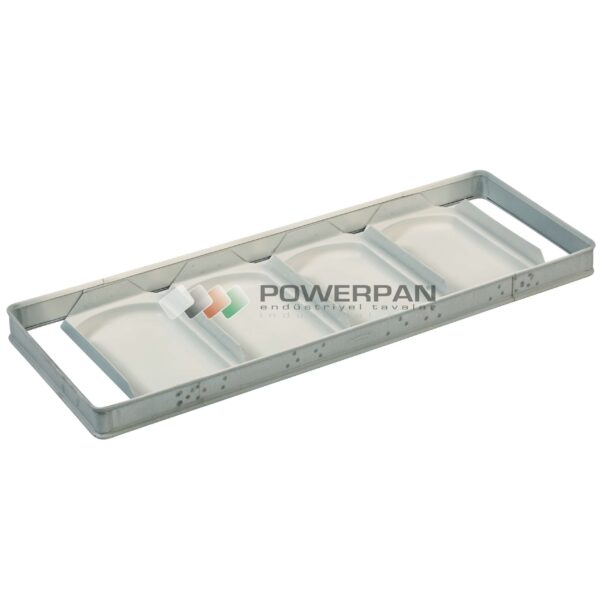
An oval kumru sandwich bread pan is a baking mold that shapes long oval breads in separate cavities. It can also be considered for sandwiches requiring a similar form in addition to kumru service. However, using the same mold with different recipes does not mean every product can be prepared with the same dough quantity and baking arrangement.
Start with the space for filling
The width available for filling and the base left after cutting matter as much as sandwich length. While the oval ends determine the product’s appearance at service, the middle carries most of the filling. Assess the target bread with the actual serving contents, not just its appearance when empty.
Show cavity base width, opening width, and depth separately in the drawing. Two oval cavities of equal length may produce different cross-sections. A high sidewall alone does not guarantee that dough will not overflow or that bread will reach the desired height. Assess dough placement and proofing level together with this result.
One mold, different recipes
A filling arrangement accepted for kumru bread should not be transferred directly to another oval sandwich recipe. When fat, sugar, or other ingredients change, trial the dough’s behavior in the mold and removal conditions again. Establishing a separate acceptance sample for each recipe makes comparison easier.
- Examine fullness at the oval ends and width through the middle.
- Check whether dough extending beyond the cavity boundary joins neighboring products.
- Assess base color and the integrity of bread released from the mold.
- Test whether the serving cut leaves enough space for filling.
The slit opened in the bread for filling is a separate operation after baking. Do not assume the oval mold creates it automatically. Cutting direction and the amount left connected are determined by the facility’s serving method. If the sandwich will be packaged, add the finished product’s position inside the packaging to the sample assessment.
Production and cleaning arrangements
When determining cavity layout, consider external pan dimensions, oven supports, and staff gripping areas together. More cavities alone do not mean greater production capacity. Proofing, oven loading, removal, and cooling all affect capacity.
Dough and topping residues may remain at the ends of long oval cavities. Inspect these areas separately during cleaning; do not scrape them with sharp tools. Provide the recipe and operating conditions for coating selection and follow the product instructions. Include a target bread sample, cavity profile, and the external pan dimensions accepted by the existing oven in your inquiry to Powerpan.