
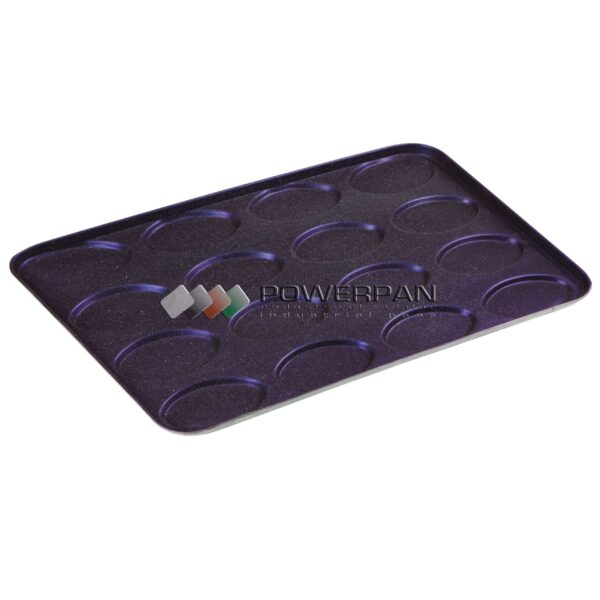
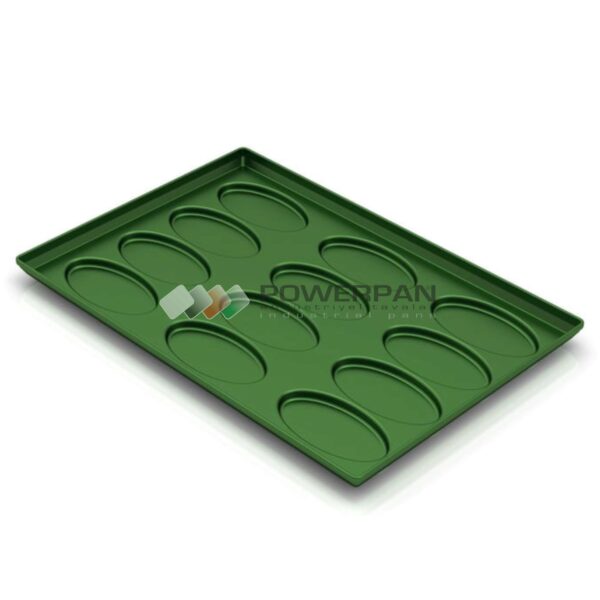
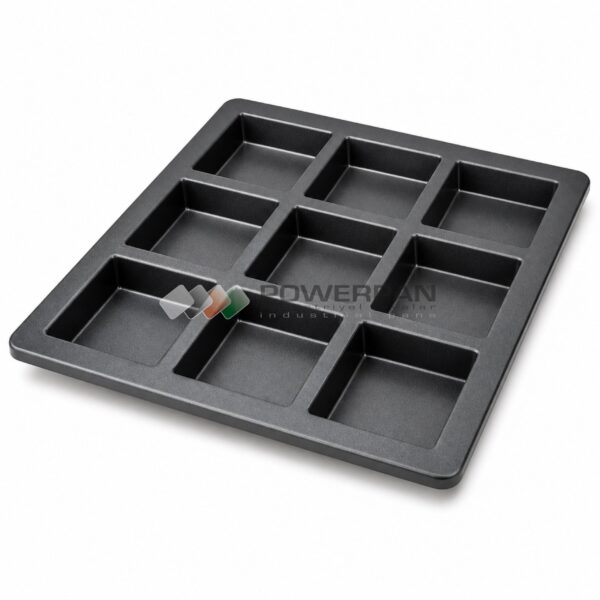
Press-stamped trays are shaped from sheet material using forming tooling. The method concerns how the metal is made into a pan; it does not automatically mean that the baking surface carries a decorative or grill-line impression.
Define the formed geometry
Provide cavity profiles, corner transitions, depth, rim details, and external dimensions. Material and construction need to suit the intended shape and use. Tooling and feasibility should be assessed before assuming that any design can be formed in a single operation.
Specify consistency through inspection
Repeat production needs an agreed drawing and the relevant dimensional checks. The manufacturing method alone does not guarantee that every item is identical or meets an unspecified tolerance. Identify the features that affect equipment fit and product handling.
- State the substrate and construction requirements.
- Describe loading, release, and stacking.
- Include coating and food-contact evidence needs.
- Keep design revisions traceable for later orders.
Surface treatment follows its own preparation and application requirements. It cannot correct an unsuitable formed profile or damaged body. Compare proposals using the same design and scope rather than assuming that stamping always establishes a particular cost, production speed, or service life.