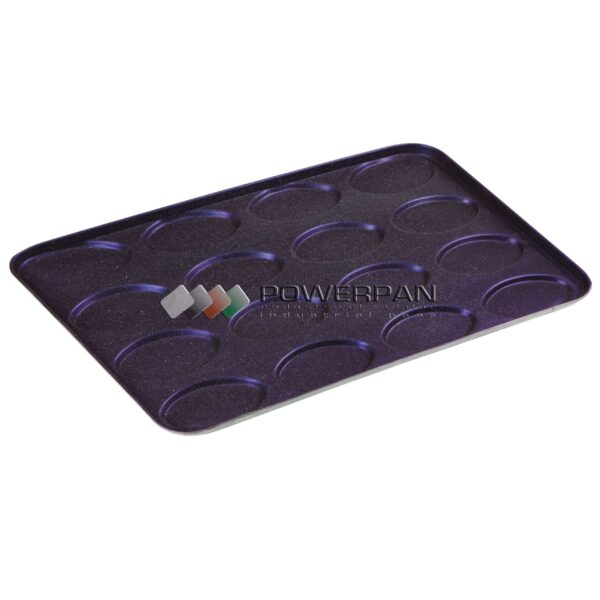
When selecting a plump sandwich bun pan, define the intended product’s shape and height. Mold cavities direct the area in which dough spreads; bread expansion and crumb structure also depend on the recipe and production conditions. The pan alone does not guarantee a soft or voluminous result for every product.
Assess cavity cross-section together with the target bread shape. Cavity shape can affect sandwich cutting and filling methods. In a request to Powerpan, explain the form required together with dough weight and the equipment to be used.
Depth and cavity layout
Cavity depth, edge transitions, and base structure change product contact. Allow the necessary space between dough pieces as they expand. Actual oven capacity or finished product weight cannot be inferred directly from cavity count.
Identify where the product catches on sidewalls. If some cavities require more intervention, inspect removal method and alignment. A coating change does not automatically correct distorted body shape or line settings.
Coating and product release
Assess PTFE-based or other systems against the recipe and operating conditions used. For sugary or fatty dough, the coating name alone is insufficient. Do not assume that greasing will be eliminated or that a fixed service life in years will be achieved.
- Target product form and cutting method.
- Dough weight, recipe, and fermentation conditions.
- Cavity drawing, external dimensions, and oven layout.
- Removal, release agent, and cleaning method.
During first use, observe the base, sidewall, and top shape of products from different cavities together. Assessment under the same conditions provides a more meaningful comparison. Check food contact scope and operating limits separately for the relevant system.
If the cavity opening and base widths differ, assess product cross-section accordingly. Depth alone does not establish that the product will have the expected volume. Use cross-section drawings, dough placement, and finished-product observation together. This prevents different pans with similar names from being considered equivalent based only on appearance.
For refurbishment, inspect the metal body after removing the old layer. Do not cover cracks, corrosion, or connection damage with a coating. Avoid hard scrapers and cutting inside the pan during use. Remove pans showing layer separation from production. Confirm actual cavity shape, dimensions, and product options before ordering to define the application scope.