Square or rectangular cavities in a medium sandwich bread pan are used to form a particular cross-section along the bread’s base and sides. This form provides a different serving arrangement from a round hamburger bun or long oval sandwich mold. Consider how the bread will be cut, how the filling will sit, and which packaging will be used together when making a selection.
Describe the 10-12 cm target accurately
A dimensional range alone is not a product drawing. Specify one side length for a square cavity, and length and width separately for a rectangular cavity. Explain whether the measurement is taken at the cavity opening or base. Depth and wall profile may change the dough volume of two molds with the same top dimensions.
A product developed with a 10-12 cm target may reflect the portion preference of a particular business. This range should not be treated as a mandatory or most common worldwide standard. Check baked bread dimensions together with the recipe and production process as well.
Corners, top surface, and cutting
Filling the corners of a square cavity depends on more than mold shape alone. The dough’s starting form and proofing level also affect the result. If gaps remain at the corners, assess filling and process together instead of pressing the dough harder. Surface damage caused by sharp tools during removal may increase sticking in later batches.
- Examine the finished bread’s base and corners separately.
- Check for unwanted overflow or joining at the top surface.
- Assess the space available for filling in the cut slices.
- Test whether the bread fits into its serving package without compression.
The way a sandwich is prepared changes the acceptance criterion. Bread split through the middle and bread used in thin slices may not need the same cross-section. Assess the sample not only as a whole loaf, but also with the actual cutting and filling arrangement.
A layout suited to the production flow
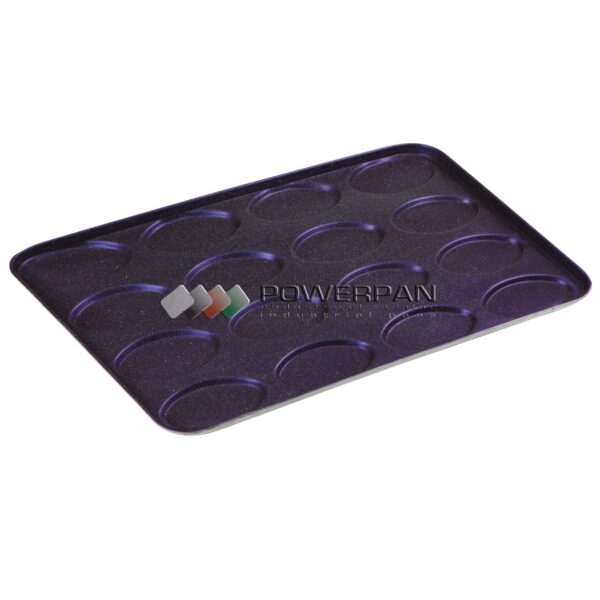
When determining cavity count, calculate external pan dimensions, cavity spacing, and gripping areas together. A denser layout may make dough placement or clean product removal more difficult. Test oven loading and placement on the transport trolley using the actual equipment.
Share the target cross-section, dough characteristics, and oven dimensions in your inquiry to Powerpan. Obtain coating system operating limits from the instructions for the selected product. Clean dough residues at cavity junctions regularly; set bent pans or those with lifting coatings aside for assessment. Record product dimensions, cavity layout, and maintenance method together with the approved drawing.