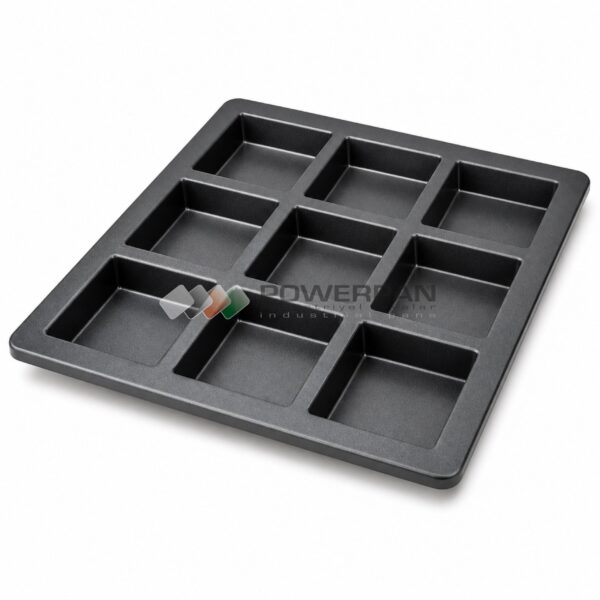
A square panini bread pan is used to assess square bread production together with the subsequent cutting layout. Straight edges make a cutting pattern easier to define. However, a square shape does not itself establish that every slice will weigh the same or that oven space will be used without loss.
Geometry and portion weight are different
A square product can be divided into equal-sided pieces or cut diagonally into triangles. Whether this layout also meets portion-weight targets depends on bread thickness and the distribution of its internal structure. Check the cutting target by dimensions and the weight target on the finished product.
Distinguish usable internal area from overall mold dimensions. Corner transitions, rim height, and dough expansion during baking affect the finished square shape. In a multi-cavity design, show each cavity’s dimensions and center spacing in the technical drawing.
Serving and packaging fit
Square bread fits square packaging only when its actual dimensions are suitable. Adding filling can change the package height needed and how it closes. If the bread will be used in a panini press, test the plate area, bread cross-section, and filling height together. The pan that bakes bread in an oven is not the same equipment as the press itself.
- Specify dimensions for the whole loaf and cut serving pieces separately.
- Share the cutting layout and target portion weight.
- Check the package’s internal area and height.
- Inspect corner shape, the base, and filling placement in the sample.
Maintain the required working and airflow gaps between pans in the oven. A square shape reaching toward rack corners is not enough to calculate an automatic capacity increase. Assess product height and tray movement within the actual production arrangement.
Release from the surface and care
Select the coating based on the dough recipe and removal method. Pay particular attention to the product and surface condition at square corners. Separating corners with a metal knife during demolding can damage the coating. Plan cutting so that it does not damage the coated base either.
Clean the cooled mold with appropriate tools; segregate it if surface damage or bent edges are found. Including cutting and serving plans alongside the square form in a Powerpan request helps match product geometry to the facility’s actual portion requirements.