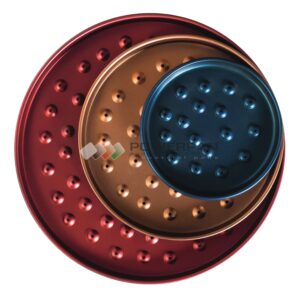
The first step in developing a custom-shaped baking pan is to define the desired shape together with production conditions. A visually striking form must fill with dough, release the baked product, and be cleanable in daily use. If these three issues are not considered together, the design may create unexpected problems at the sample stage.
From a shape sketch to product requirements
A sketch or sample product is a useful starting point. However, cavity depth, base profile, and top view should be shown separately. Very narrow recesses or deep details affect dough placement and the release path as well as appearance. State clearly which details must be visible in the product.
Assess shape through the released product; do not assume a detail visible on the metal surface will appear with the same sharpness in bread or cake. The recipe and product surface development during baking may change the appearance of details. Establish an acceptance sample and comparison method for the target form for this reason.
Access for release and cleaning
Consider the direction in which the product will release when designing the mold. Narrow necks, inward-facing details, and corner junctions need particular attention in sample review. Forcing the product out with a sharp tool is not a substitute for suitable design.
- Can dough reach all required areas?
- Does the baked product release intact while retaining the target form?
- Can residues in recesses be cleaned using the permitted method?
- Does the pan fit the loading, handling, and stacking arrangements?
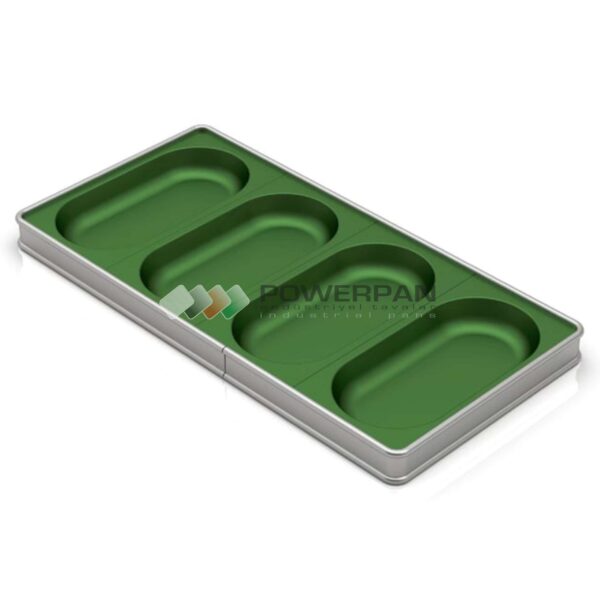
The layout of cavities on the tray is also part of the design. One cavity working well does not guarantee the same result across an entire multicavity arrangement. Assess cavity spacing, handling areas, and oven placement together with the sample.
Approval and change records
At drawing approval, identify critical dimensions and accepted tolerances. Do not assume the same precision, prototype method, or analysis service for every project. Confirm the scope of design, sample, and series production stages separately during quotation.
If changes are requested after a trial, update the drawing version and recheck the affected criteria. Approving the previous sample does not automatically approve changed geometry. Describe the product form, recipe characteristics, oven conditions, and removal method together in your inquiry to Powerpan. This turns a custom design from a request for a shape alone into a production requirement that can be assessed.