A custom-size tray is considered when a carrier surface needs to fit an existing oven or product layout. The correct dimension is not just the oven’s internal width. Shelf support points, loading direction, door opening, and tray edge construction must be checked together. Two trays with the same external dimensions may differ in usable internal area.
State where measurements are taken
For the quote, describe external length and width, height including the edge, and the internal area for products separately. If there is a folded edge, reinforcement, or gripping section, show its effect on external dimensions as well. Sharing the oven’s nominal tray size is useful, but it does not replace measurements of the actual shelves and door.
If an existing tray works without problems, a dimensioned sample can serve as a reference. If there is a problem, explain which feature of the sample needs changing. Reproducing a door-catching edge or an inadequately supported base by copying dimensions may perpetuate the same problem.
Solid surface, perforation pattern, and edge
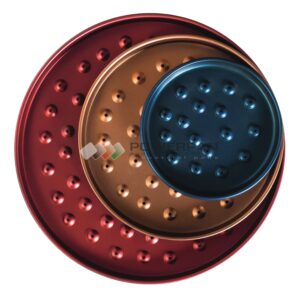
Choose a solid or perforated base in relation to the product and process. A perforated surface does not mean better baking with every dough; trial how the dough sits on the surface and whether it sags through the holes. Hole diameter, spacing, and unperforated edge areas should form part of the technical drawing.
| Design element | Inspection purpose |
|---|---|
| External dimensions | Oven entry and shelf support |
| Usable internal area | Actual product layout |
| Edge height | Product boundary and grip during handling |
| Base pattern | Product contact, baking, and cleaning |
Assess the sample under actual load
An empty tray fitting into the oven is not a sufficient acceptance test. Trial loading, removal, and handling with the planned product arrangement. Observe clearances affecting airflow in the oven and distance from neighboring shelves as well. Match the coating or body material selection to actual operating temperature and cleaning method.
Stacking method also matters. Interlocking edges may make separation difficult; rubbing surfaces may damage the coating. Check stacking and the transport rack before completing design decisions.
Include a dimensioned drawing, oven and trolley information, sample product layout, and an explanation of the existing problem together in your inquiry to Powerpan. Keep the approved drawing version and reference the same drawing in the order. Feasibility of custom dimensions, order quantity, and delivery conditions are separate quotation matters; they cannot be established solely from a size request.