
Evaluating water use in coating processes
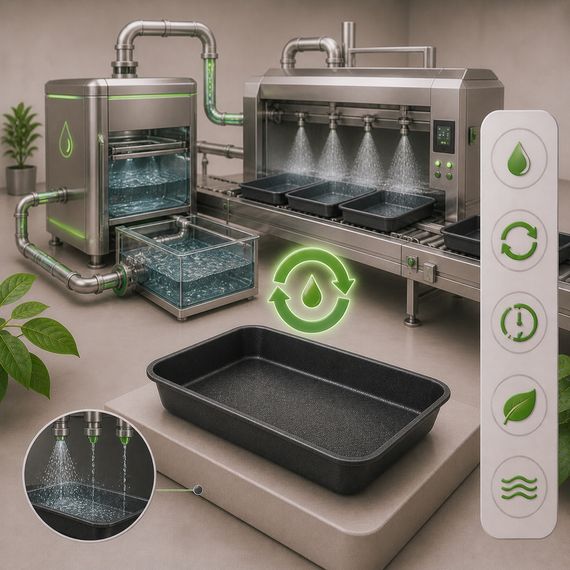
For water-saving coating processes, first identify where water is used. Rinsing after surface cleaning, cleaning application equipment, and cleaning the process area serve different purposes. If the total meter reading does not distinguish these stages, it may be unclear which operation has changed.
Separate rinsing from equipment cleaning
Rinsing removes cleaning agents and contaminants remaining on the surface. Using less water does not, by itself, show that the required cleanliness has been achieved. Define surface acceptance requirements first, then assess water consumption while maintaining those requirements. Monitor the quality of used water alongside its volume.
Cleaning fixtures and application equipment can be recorded separately. When a cleaning step becomes less frequent, examine its effect on residue buildup or rework requirements. Low-volume washing does not produce the same result for all metals and coating materials.
Process options and limits
In countercurrent rinsing, clean water can flow from the final stage toward earlier stages. Whether this arrangement is feasible depends on process chemistry, contaminant load, and the required surface quality. If dry preparation is an option, assess its water requirements separately; thermal treatment or dry blasting must not automatically be considered suitable for every pan.
- Record water consumption by process stage.
- State the accepted part count or treatment area.
- Monitor rinse quality and rework.
- Assess wastewater quality and volume together.
Production-line washing is a separate calculation
Water use at the coating facility and washing the coated pans at the customer’s site are separate processes. If product residue decreases, washing requirements may change; verify this in actual use. Do not recommend reducing water or chemicals without checking hygiene.
When discussing a project with Powerpan, share the existing surface, stripping requirements, and usage information. If water savings are claimed, ask which stage and comparison period the claim covers. Do not state that the facility has a cascade system, water reuse, or a particular washing technology without documentation. Assessing unit consumption records, surface quality acceptance, and wastewater scope together makes the meaning of savings clearer.
If water is reused in a system, quality acceptance must be assessed for every relevant stage. Record contaminants accumulating elsewhere in the process or additional cleaning requirements while total fresh water use decreases. An assessment based only on the difference between meter readings may not show these changes. Tracking water volume alongside accepted surfaces makes the comparison easier to understand.