
Evaluating emissions in production processes
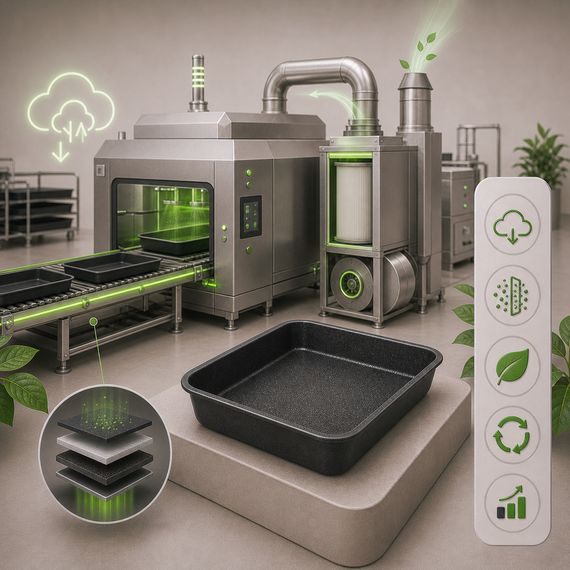
Assessment of low-emission production technology starts by identifying which operation generates the emissions. Surface preparation, old coating removal, spraying, and curing can create different streams. Assessing every stream through odor or visible dust alone is not sufficient.
Defining emissions and process boundaries
The materials used, operating temperature, and process duration must be included in the technical file. Material loss during spraying and gaseous components are not the same control issue. The presence of an air filter does not show that all components are controlled by the same method. The control system must be professionally assessed for the stream generated.
Names of methods such as thermal or catalytic treatment, filtration, and adsorption are not evidence that these systems are installed at Powerpan’s facility. Appropriate technology and operating conditions for a specific process must be based on system design and measurement data. A single temperature range or general explanation of conversion must not be used to claim that all emissions become harmless.
How to read measurement results
- State the process and operating load during measurement.
- Explain the component measured and the method used.
- Identify the sampling point and measurement period.
- Record production volume and the condition of the control system.
Do not compare results obtained at different production loads as though they covered the same conditions. A low concentration at one point does not, by itself, show a low total emissions load. Review process changes, maintenance, and material changes together with the records.
Evidence needed for supplier assessment
When discussing coating with Powerpan, ask which emissions and process information can be supplied for the relevant operation. The document date, measurement scope, and connection to the facility must be clear. A general environmental management certificate does not substitute for a specific treatment efficiency or low emissions quantity.
Targets for reducing material losses at the source and rework can also be considered. However, eliminating control steps or switching to an unsuitable formulation must not count as an improvement. Support low-emission claims with records defining baseline conditions and comparison boundaries. Suitability of the working environment requires a separate expert assessment; product copy does not replace technical design or an occupational safety review.
The measurement report must represent operating conditions. A short trial after maintenance may not have the same scope as a normal production record. If material or load has changed, state that alongside the result. Keeping the control equipment’s maintenance history and measurement date in the same file makes clear which operating state a low-emission claim refers to.