
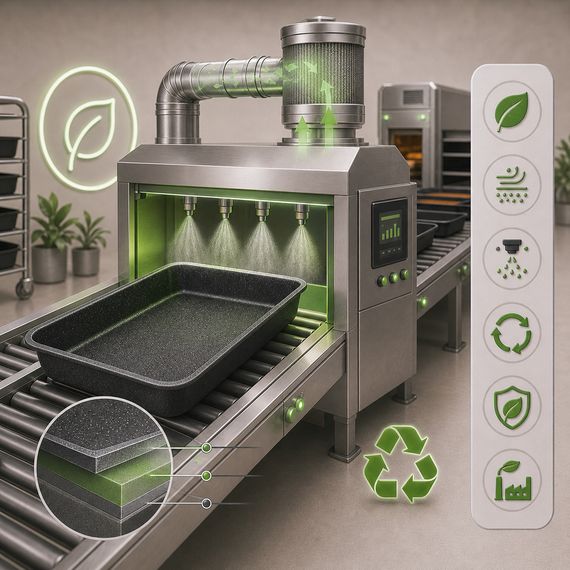
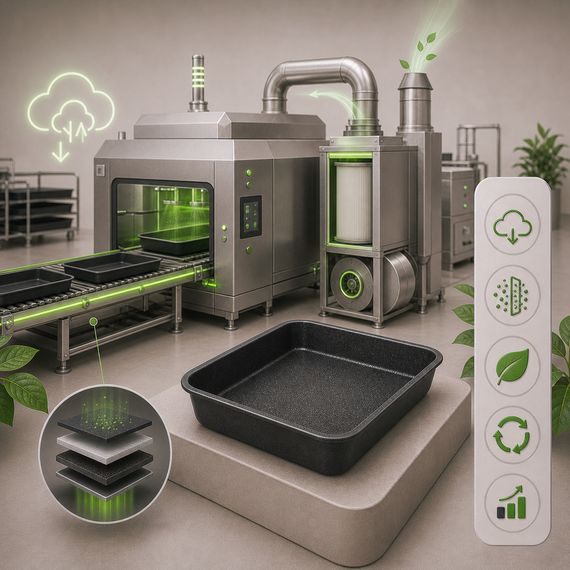
Environmentally responsible coating processes consider the resources used and the outputs created during preparation, application and curing. Evaluating those stages separately gives a clearer picture than describing a coating as environmentally friendly without explaining the basis for the claim.
Follow the process from preparation to finish
Cleaning and stripping can generate residues and used process materials. Abrasive preparation can create dust, while application and curing have their own material and energy requirements. The appropriate controls depend on the actual products, equipment and process being used.
- Identify the materials entering each stage and the waste leaving it.
- Consider extraction and collection requirements at the source.
- Track energy, cleaning inputs and rejected work.
- Keep waste handling and process control within the site’s applicable procedures.
Support comparisons with records
A lower-emission or lower-consumption claim needs an identified comparison and a consistent measurement basis. A change in production volume can change total consumption without improving the process itself. Product descriptions and environmental management-system certificates do not, on their own, quantify the footprint of a particular coating job.
Include equipment renewal in the assessment
Recoating may keep a suitable body in use, but stripping, preparation and application also require resources. Compare renewal with replacement using the equipment’s condition and the work actually required. Avoid treating either route as automatically impact-free or assigning a universal environmental saving without a relevant assessment.