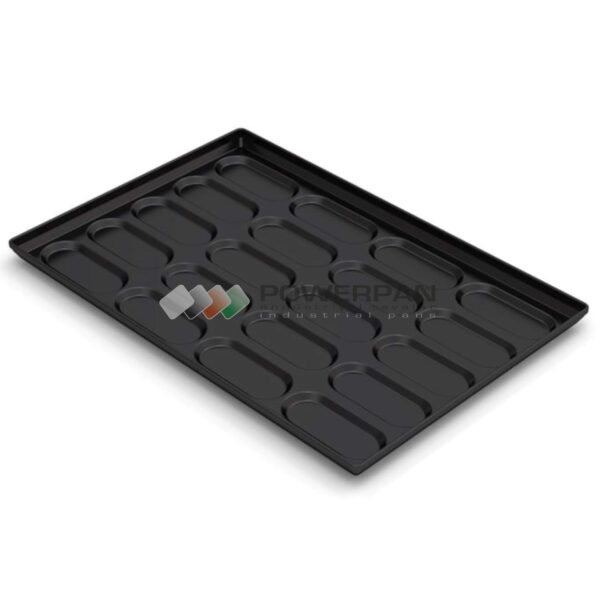
A hot dog bun pan is grooved equipment or a pan with long cavities considered for producing elongated bread. Define target bread length and cross-section when selecting it. Sausage or filling size affects serving requirements; match mold dimensions to the actual dough and baking conditions.
A long groove directs the area in which dough spreads. Finished product height and texture do not result from the mold alone. Dough weight, fermentation, and the baking program also affect the outcome. Do not infer a precisely cylindrical shape or a particular portion capacity from the mold name.
Groove ends and product release
Inspect the long cavity’s base, sidewalls, and end transitions separately. If sticking occurs at particular ends, check dough placement and removal method as well as surface damage. Assess spacing between cavities using an arrangement that prevents contact as products expand.
Coating distribution must preserve the geometry. If an old pan has deformation or weakened joints, a new surface does not repair them. A refurbishment request requires separate consideration of base metal condition and removal of the old layer.
Information to share in the request
- Target product shape and dough weight.
- A groove drawing or photograph of the existing pan.
- Oven dimensions and product removal system.
- Recipe, release agent, and cleaning method.
In Powerpan’s assessment, this information helps define an appropriate product or coating scope. Daily sales volume alone does not require a particular branded system. Assess technical use limits and food contact scope separately.
Before first use, clean and prepare according to the selected system’s instructions. Applying oil and holding at a particular temperature is not a common rule for every coating. During initial production, observe end, sidewall, and base contact separately.
The long cavity’s opening and base cross-section may differ. If retaining product shape is required, show this detail on the drawing. Consider the slit to be cut for filling later together with the target bread form. Assess separately through a finished-product trial which pan dimensions meet serving requirements.
Do not scrape grooves with hard tools, and protect coated surfaces from rubbing during stacking. Remove pans showing layer separation from production for inspection. Confirm current dimensions and cavity options through a product drawing; clarify order quantity, application scope, and delivery plan after assessment.