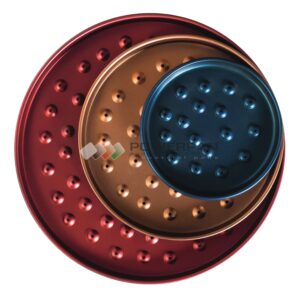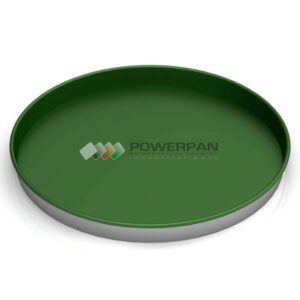
A poppy seed bread pan is a round mold without a lid. It supports the dough from below and around the sides while leaving the top open. Mixing poppy seeds into the dough and applying them to the surface can create different production needs; specify the intended recipe in the request.
What does an open mold determine?
A lidless structure does not restrict upward bread development with a cover. The product’s dome and crust, however, develop through the dough load, shaping, and oven program together. Using an open mold does not mean that it reproduces every baking effect of a stone oven or delivers a particular flavor.
Select inner diameter and depth together with the target bread shape. Do not assume that a larger diameter corresponds to a particular weight. During the sample trial, check dough placement against the edges, baked product release, and base color. Poppy seeds falling from the top onto the tray are also part of maintenance assessment.
Share oven conditions explicitly
The name stone oven alone provides no coating temperature or suitability information. Explain the pan’s location, possible direct flame exposure, and operating conditions in the technical discussion. Do not infer a universal high-temperature limit from the name ceramic or PTFE.
For PTFE surfaces, overheating and suitability for direct flames require separate assessment. The BfR guidance warns about excessive temperatures that can occur over open flames. This information is not stone-oven approval for any Powerpan system.
- Specify target bread diameter and height.
- Share how poppy seeds are applied and the dough recipe.
- Explain the oven type, placement area, and operating program.
- Record base, edge, and mold release results in the sample trial.
Surface residue and maintenance
After the mold cools, clean seed, oil, and dough residue with suitable tools. Do not scrape coated surfaces with a metal tip. If edge deformation or lifted coating appears, separate the equipment for inspection. Providing oven conditions together with the open round mold description in a request to Powerpan allows product and surface suitability to be assessed in the proper context.