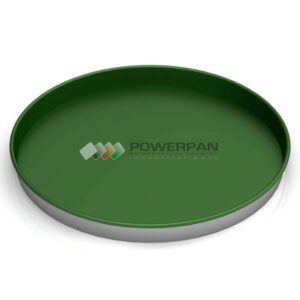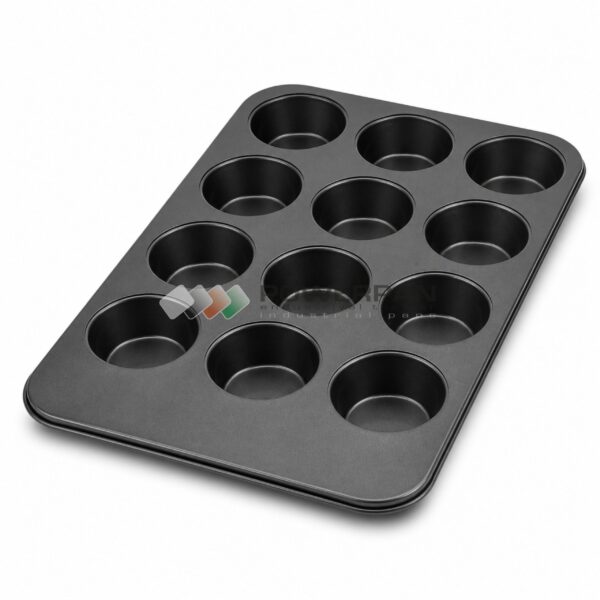
A flat muffin tray is a carrier tray without fixed recessed cavities. The muffin’s shape is formed by suitable separate molds or rings placed on the tray. A flat tray is therefore not the same equipment as a cavity muffin mold into which batter is poured directly.
Separate the carrier from the shaping mold
The tray carries the separate molds into the oven and provides base support. Assess paper liners or separate molds according to their own conditions of use. Do not assume that every paper liner is suitable for filling without support. If rings are used, check base closure and leakage of the mixture in the sample setup.
Separate molds allow the layout to change, but this does not mean that every size will bake under the same oven program. If product height and batter quantity differ, test operating conditions separately. Placing molds too close to one another or to the tray edge may make filling and removal more difficult.
Checks required for a flexible layout
| Component | Assessment |
|---|---|
| Flat tray | Outer dimensions, flat base, and seating on oven rails. |
| Separate mold or ring | Shape, base support, and its own conditions of use. |
| Layout | Spacing, filling access, and movement during handling. |
| Product | Fill level, baking, and release from the mold. |
Assess the suitability of this setup together with preparation and collection time. Changing molds may allow different products to be tested, but does not automatically mean higher capacity or lower cost.
Requests and maintenance
A request to Powerpan can include details of the separate molds to be used with the tray, oven dimensions, and the filling method. Do not assume that rings, liners, or silicone molds are supplied with the tray; ask explicitly about the quote’s scope.
For cleaning, distinguish the carrier tray’s instructions from those for the separate molds. Remove batter residue spilled onto the tray with suitable tools; do not scrape the coated base with a metal tip. Separate and inspect trays with a bent base or lifted coating. Before production, also test handling the loaded setup and moving it into and out of the oven.