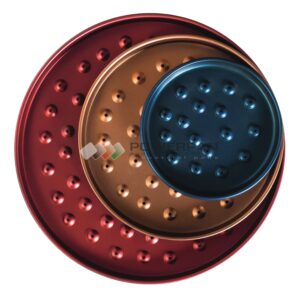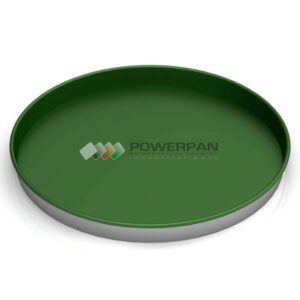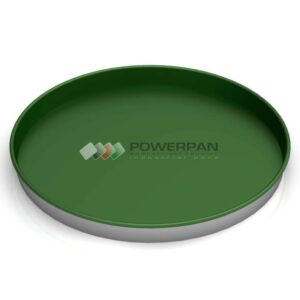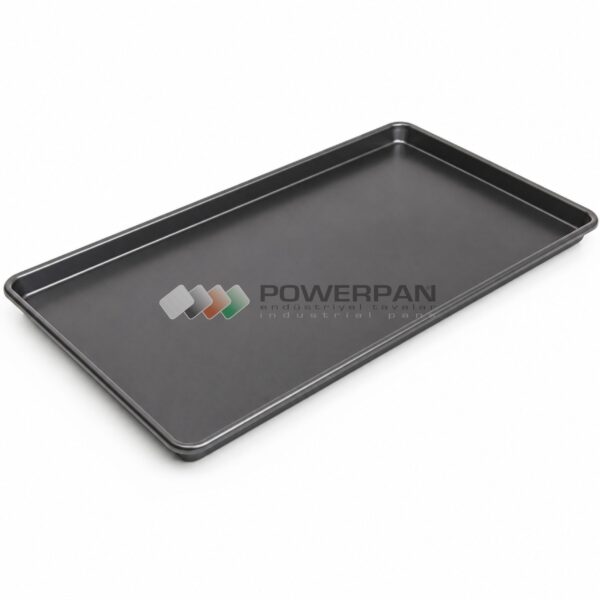
An Epan tray is defined as a flat or shallow-sided carrier intended to work with an automatic oiling setup. Unlike a multi-cavity pan, assessment concerns distribution over a continuous surface. The technical decision depends on line position, edge shape, and oiling method, not simply on whether the tray is coated.
Does the oiling area match the tray area?
The tray’s outer dimensions do not directly show the area covered by the nozzle. Check how the edges, corners, and leading and trailing ends receive oil. Oil pooling and dry areas occurring at the same time require assessment of the surface and line settings together.
The profile contacting conveyor guides and the detection points also matter. A change in edge dimensions may affect how the tray arrives at the oiling point. Do not assume that the existing system will automatically recognize every new outer size or work with the same program.
Do not reduce surface texture to one number
Roughness is one factor affecting how the coating and oil behave together. However, no single optimum surface value applies to every dough. A roughness value without technical documentation must not be presented as a verified feature of a specific product. Monitor distribution and baked product release together during sample assessment.
| Inspection area | Trial record |
|---|---|
| Line passage | Guide contact and detection position. |
| Oiling | Distribution in the center, at edges, and in corners. |
| Baking | Base appearance and release from the surface. |
| Cleaning | Removal of oil and dough residue. |
Requests and usage monitoring
A request to Powerpan must include the oiling equipment model, tray drawing, and product information together. If oil consumption will be compared, record production and line settings. A general efficiency statement does not replace consumption measurements specific to the facility.
A dirty surface or bent body may change the conditions of the initial trial. Carry out regular inspections and suitable cleaning; separate and inspect trays showing lifted coating. In refurbishment assessment, preserve the edge profile and dimensional fit during line passage as well as the surface.