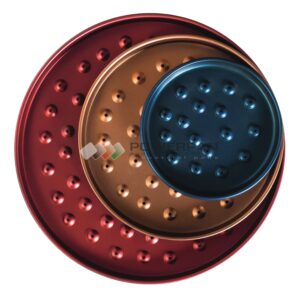
A daisy bread pan is a shaped mold used to produce flower-shaped bread with petal-like projections around its perimeter. This appearance can be considered for presenting a whole loaf or serving it in pieces. A petal-shaped mold, however, does not mean every section of the bread will automatically separate into equal portions.
Petal count and connection to the center
If a six- or eight-petal design is targeted, show petal width, center size, and the recesses between them in the drawing. Petal count alone does not describe mold dimensions. Two cavities with the same number of petals may have different external diameters and depths.
The connection between the center and perimeter affects intact removal and how the bread separates during service. Define how pronounced the peripheral recesses should be through the finished product. Do not assume a line visible in the mold will appear with the same sharpness in baked bread.
Trial dough placement
A mold filled with one dough piece may not give the same result as an arrangement of smaller dough pieces placed together. Determine which method to use through the actual recipe and sample trial. Starting shape, fill quantity, and proofing level together affect petal fullness.
- Check that dough occupies all petal areas in a similar way.
- Examine baking and color differences between center and outer sections.
- Observe whether narrow connections tear during product removal.
- Assess whether pieces separated for service match the intended portion.
A top view alone is not enough for sample assessment. Examine the underside, peripheral profile, and center connection as well. For bread intended for sharing, trial the actual separation method; for a product to be cut, assess slicing results separately.
Preserving shape and cleaning
Recessed areas may be stressed during removal. Using hard or sharp tools unsuitable for the mold may damage both product shape and the coating surface. If sticking occurs, review dough, baking, removal timing, and surface condition together. Remove a damaged mold from production.
During cleaning, give separate attention to narrow areas between petals and base junctions. Use cleaners and tools permitted by the manufacturer; visually inspect areas where residues remain. Keep cleaned molds from scratching one another during stacking.
Share the target petal count, a finished bread sample, recipe characteristics, and oven dimensions in your inquiry to Powerpan. A preference for Aegean-style presentation may serve as visual direction, but cultural origin, mandatory regional dimensions, or a nutritional property should not be treated as technical characteristics of the mold.