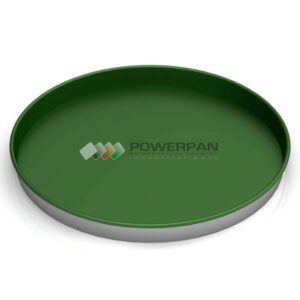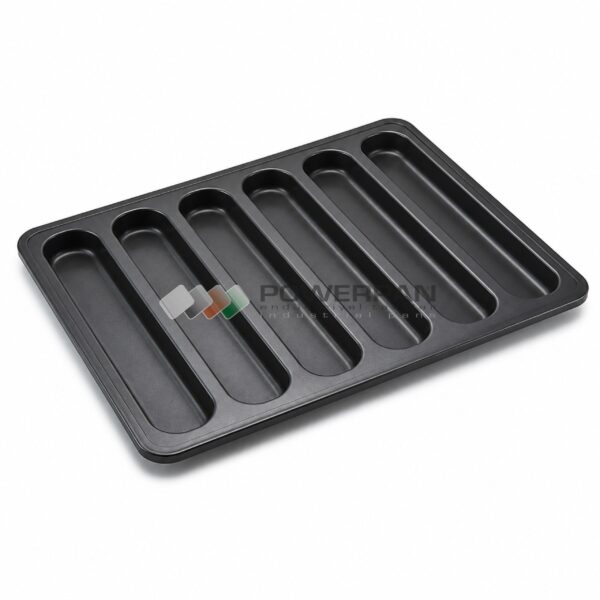
A rusk tray is assessed for carrying slices or thin dough products through baking and drying operations. The production goal is not simply fitting more pieces on a tray at once. Plan loading, drying, removal, and empty-tray return together.
Start by defining the product and process
Alongside the name galeta, specify whether the product is a bread slice or thin dough baked directly. If there is more than one heating stage, explain how the tray is used at each stage. The words pan and tray are not a common technical standard that inherently defines different daily capacity classes.
Compare the tray’s outer dimensions with the conveyor or rail arrangement. Slice thickness, spacing, and direction of travel determine the usable inner area. Choosing a large surface does not mean that a loaded tray will be easy to handle or that every area will give the same drying result.
What to monitor in a drying trial
During a trial with the same product load, record color and texture differences between the center and edges. Assess the condition after cooling as well. It is not accurate to present the tray surface as a performance factor independent of changes in oven settings or product thickness.
| Stage | Inspection |
|---|---|
| Loading | Slice thickness, spacing, and prevention of sliding. |
| Drying | Rack or line position and results by area. |
| Transfer | Breakage, surface release, and edge access. |
| Return | Empty-tray passage, stacking, and cleaning. |
Line fit and maintenance
If loading or removal is automated, confirm the tray edge and gripping areas against the project drawing. Do not assume unconditional compatibility with a particular tunnel oven. Assess the coating system with all heating stages and the cleaning method specified.
Regularly inspect crumb buildup, edge damage, and body bending. Separate damaged trays for inspection; do not scrape coated surfaces with metal tools. Providing the product’s processing sequence and equipment dimensions together in a request to Powerpan gives a more useful technical starting point than a general high-volume description.