
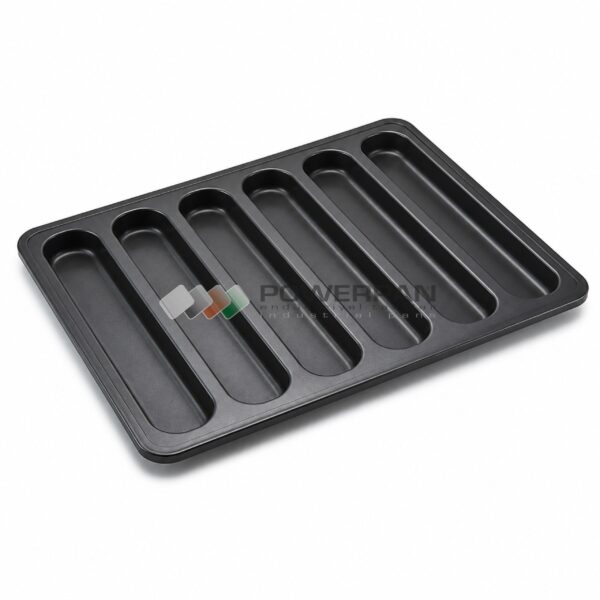
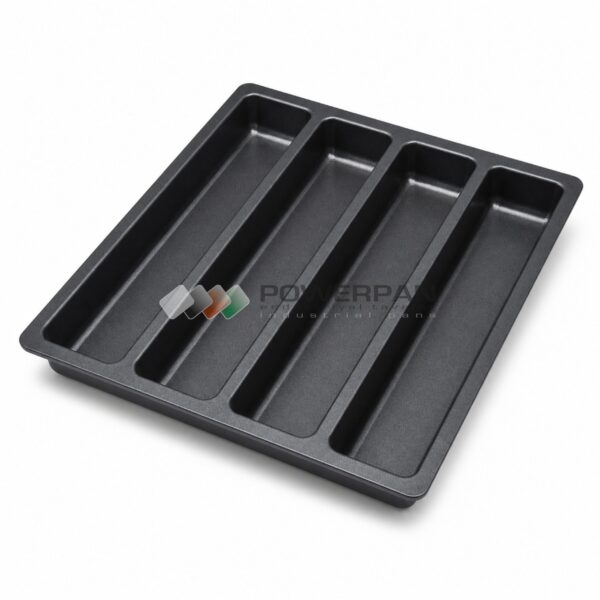
Breadstick trays for galeta production should match the actual crisp-bread product and its processing stages. Galeta and grissini should not be treated as interchangeable specifications, and this category does not concern generic loaf pans.
Clarify the product and baking sequence
Provide the breadstick’s dimensions, dough, and loading method. State whether pieces are formed individually, cut from another baked form, or given a separate drying stage. A sliced, twice-baked product needs a different support brief from individually formed sticks.
Choose support for each stage
Spacing, base design, and tray edges should suit loading, moisture removal, and transfer. Solid, perforated, or formed constructions need evaluation with the actual product. A familiar name or crispness description cannot establish the correct pan geometry.
- Show the intended finished product.
- Describe initial baking and any later drying.
- Identify release, cooling, and handling.
- Include cleaning and food-contact documentation requirements.
Select the surface system for the substrate and operating conditions. Do not infer a shelf life, guaranteed crispness, or a fixed output from the coating. The inquiry should make the galeta format explicit so that the proposal addresses the intended breadstick rather than a different cracker, rusk, or loaf process.