
Before-and-after coating comparisons
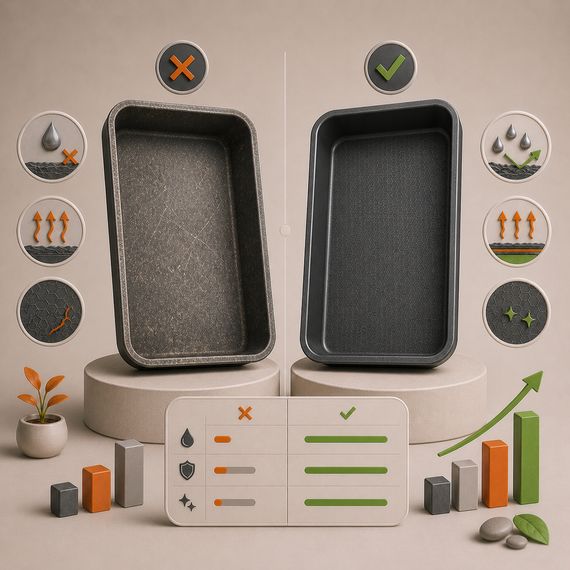
In a before-and-after coating comparison, showing the change in the same part is more meaningful than placing two similar-looking pieces of equipment side by side. A photograph alone, however, cannot establish nonstick performance, service life, or suitability for food contact. Visual records and production data should be evaluated together.
Compare three recording points
| Recording point | Condition to document | Information to retain |
|---|---|---|
| Before treatment | Existing surface and body condition | Part identification, date, and damaged areas |
| After application | Condition of the new surface at delivery | Application description and inspection records |
| After use | Changes over a defined period of use | Cycles or operating time, maintenance, and product information |
The difference in appearance between a new surface and a worn surface does not prove that the new system lasts longer than the previous one. A service-life comparison requires knowledge of the operating conditions and monitoring period for both systems.
Keep photographic records consistent
- Photograph the same area from a similar angle and distance, under similar lighting.
- Record a close-up of the damaged area as well as an overall view.
- Associate the part identification and capture date with the image file.
- Note whether the surface has been cleaned.
- Avoid filters that alter the assessment of color or texture.
Surface deposits and coating loss are not the same thing. Describe what is visible instead of treating a symptom in a photograph as a definitive cause. If detachment or loose particles are suspected, photographs should not substitute for the necessary technical examination.
Record production performance separately
Track product-release problems, cleaning labor, and the quantity of rejected products at defined intervals. Changes in formulation, oven program, or lubrication should be visible in the record. If several changes were made at once, do not attribute the result solely to the coating change.
Comparing equipment on the same line is useful, but does not in itself hold every variable constant. Operator practices, product batches, and equipment position may also affect the result. Identify uncontrolled differences in the comparison report.
How should the result be written?
Separate observation from measurement: a surface appearing smoother is a visual observation; a change in reject rate should be a calculation with a definition and supporting records. Do not add a rate or service-life figure without data. When contacting Powerpan for an assessment, provide earlier and current photographs with the same part identification details.