
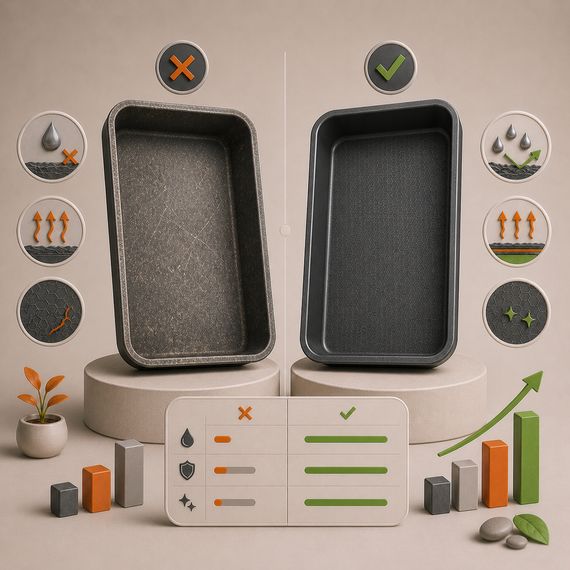

A coating case study examines a defined problem, the work undertaken and the evidence used to assess the result. Its value lies in that detail, not in presenting one project as proof that the same system will perform identically elsewhere.
Understand the starting condition
The equipment, substrate, existing coating and operating conditions establish the baseline. For a baking pan, release and cleaning may be central. For a roller or another industrial component, contact materials and mechanical conditions may be more relevant. The case needs to identify the actual concern.
Separate observations from conclusions
A change in coating may coincide with new handling, cleaning or process settings. Those changes should be recorded when interpreting the outcome. Measured results need a method and observation period; customer impressions provide a different kind of evidence.
- What was the equipment’s original condition?
- Why was the proposed coating selected?
- What else changed during the work or trial?
- How and over what period was the result assessed?
Applying the lesson to another project
Compare the conditions, not just the industry label. A useful enquiry explains where your equipment and production process differ from a reported case. Contact Powerpan with those details for discussion of an assessment; a case study cannot replace your application specification or establish a universal saving, service life or compliance outcome.