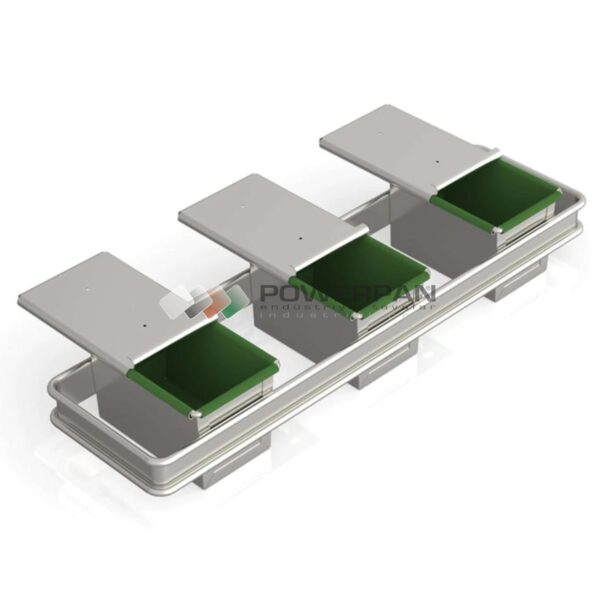
A triple bread pan combines three separate bread cavities on one carrier structure. Dough is placed in separate compartments; the pan is handled as one piece of equipment during oven loading, unloading, and transport. This structure requires a facility using individual molds to reassess handling and layout arrangements.
Having three cavities does not automatically triple oven production capacity. Compare how many products fit in the same usable oven area and how the complete production cycle works. Include compartment spacing, the external frame, and carrier layout in area calculations.
Match compartment geometry to the product
Select each cavity’s internal length, width, and depth together with the intended bread shape. Determine dough quantity and proofing arrangements separately. Instead of transferring the recipe and filling quantity from an individual mold directly to a new cavity, check expansion and release behavior through trials.
Cavities sharing one carrier do not, by themselves, establish that every compartment produces the same baking result. Observe products from the middle and outer cavities separately during trials. If sticking is localized, inspect the relevant cavity surface, loading, and removal arrangements.
Is fitting inside the oven enough?
- Compare external pan dimensions with usable rack or carrier area.
- Check the oven door, loading direction, and equipment passage route.
- Assess rack support, grip points, and handling of the loaded pan.
- Prevent cavities and coated surfaces rubbing against one another during stacking.
Catalog oven dimensions do not always show the net area available for the pan. Include dimensions for the existing cart, racks, and loading attachments in the technical request. Bending or connection damage in a long body requires assessment separately from recoating.
Coating, maintenance, and order information
Select the coating alongside the bread recipe, baking cycle, removal method, and cleaner. Do not expect a fixed service life from a system name or layer count. Verify operating temperature and food contact scope through the relevant product file.
During cleaning, check the base and corners of every cavity; do not remove residues by scraping the surface. Remove pans showing coating separation from use for quality review. In a quote request, share the three-cavity layout, product form, oven and carrier dimensions, quantity requirements, and existing pan photographs with Powerpan. Clarify current dimensions, treatment scope, and delivery terms during quotation.