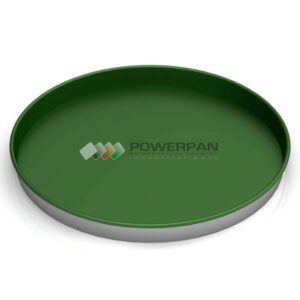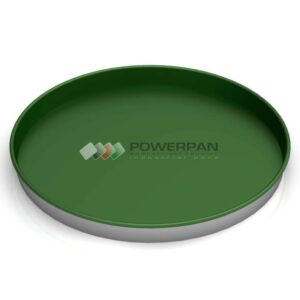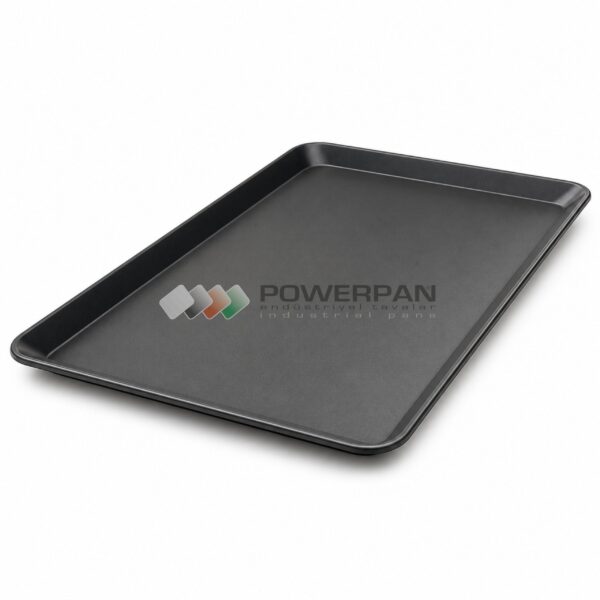
An Italian angled baking tray has sloping sides that define the dough’s lateral boundaries. It is assessed for the target cross section of filled focaccia or thicker flatbreads. The edge slope does not guarantee that filling will never leak or that every product will have the same weight.
Slope changes the inner area
With sloping sides, base area and the upper opening may differ. State outer dimensions, usable base dimensions, and upper width separately. The technical drawing must make clear which surface is used as the reference for the angle; giving only an angle value may lead to different interpretations.
Edge height and slope affect dough placement and access to the baked product together. Neither steeper nor more open sides can be called better for every recipe. Test target thickness together with dough load, proofing, and base area.
Edge allowance in filled production
If upper and lower dough layers are used, filling placement and edge sealing are part of the recipe. Mold shape does not replace these operations. Filling reaching the tray surface can change release and cleaning behavior; observe this in the sample trial.
- Define base dimensions, upper opening, and edge height.
- Explain the sloping section through a drawing or existing product sample.
- Share the dough load and filling application method.
- Monitor edge shape, leakage, and removal movements in the sample trial.
- Specify target serving cuts and packaging dimensions.
Coating and unmolding
Since sloping walls also contact dough, do not inspect only the flat base. Select the coating according to filling ingredients and cleaning conditions. Clarify system operating temperature and removal method through technical information. Use trial results instead of promises of complete shape control or zero sticking.
Clean residue at corner transitions with suitable tools; do not separate the product from the wall with a metal tip. Separate and assess trays showing edge deformation or lifted coating. Providing the target cross section and filling method alongside the angled tray name in a request to Powerpan makes it easier to assess the design against production needs.