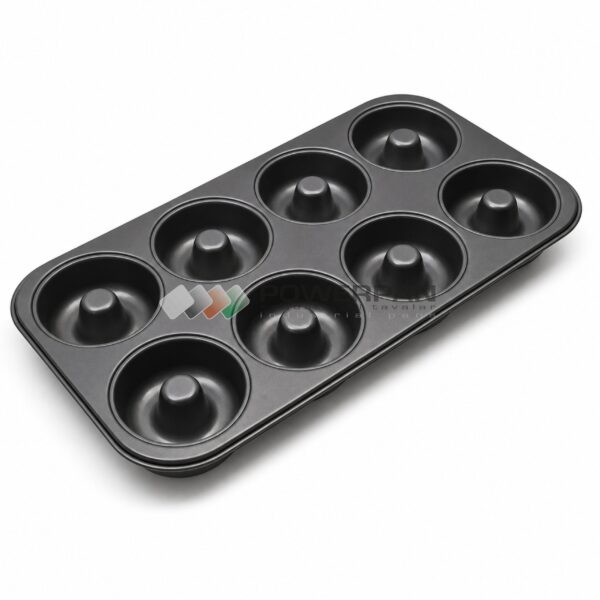
A filled cake pan is evaluated through a cavity structure that will preserve the shape of cakes containing filling. A deep multicavity structure provides a separate baking area for each cake. Placing filling in the batter before baking and adding it to the baked product afterward are different production methods; specify which method will be used in the mold request.
Cavity depth and filling position
A deep cavity alone does not establish that more filling can be used safely. Test batter rise, filling consistency, and finished product cross-section together. Filling spreading to the edges or reaching the cavity base can change release and cleaning behavior.
Filling quantity should not be inferred directly from cavity dimensions. In a sample made with the facility’s recipe, check filling distribution inside the product and its appearance when cut. Do not assume the same mold will give the same result for every recipe using fruit, chocolate, or cream.
Filling and removal arrangements
Examine alignment of cavity centers with filling equipment in a multicavity tray. If there is more than one filling step, access and overflow control are needed for each step. Do not assume a two-layer or specially cavity-forming mold structure from the filled cake name alone; such a feature must be verified through a drawing.
- Explain whether filling is added before or after baking.
- Specify the intended product cross-section and cavity geometry.
- Share batter and filling ingredients alongside the filling method.
- Monitor overflow, center baking, and release from the mold in the sample.
- Define the product shape needed for packaging and decorating.
Coating and cleaning
Select the coating with both cake batter and any filling that may reach the surface in mind. A system name does not mean automatic suitability for every filling or guaranteed nonstick performance. Clarify operating temperature and cleaning conditions through technical information.
Do not leave sugary or fatty residue in cavity corners, and do not scrape the coated surface with metal tools. Set aside a tray showing lifting or clear body damage. Including the filling method and intended cross-section in a Powerpan request provides a more informative starting point than simply asking for deep cavities.