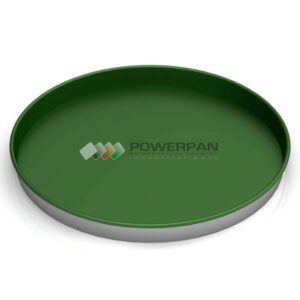
In bread made with cornmeal, a round mold determines the area over which the dough spreads and the product’s base and side shape. This pan does not select the bread’s flour composition; using cornmeal alone is a recipe decision. Using a mold for cornbread also does not, by itself, prove that the bread produced is gluten-free.
Choose the round form for the intended use
Serving bread whole, slicing it, or using it in a sandwich may call for different cross-sections. Cavity depth matters as much as diameter. A wide, low product and a narrow, tall one may not behave the same way during slicing. Define the target using a sample loaf and the actual serving format.
The internal diameter shows the space allocated to dough, while external dimensions relate to the oven and transport rack. A round bread mold does not, on its own, describe a lidded sandwich bread pan or a toaster. If a lid is requested, confirm product construction and lid compatibility separately.
Test the recipe in the actual mold
Water, fat, and other ingredients may vary in different mixtures containing cornmeal. A single fill quantity or baking time cannot be applied to every recipe. During the trial, observe dough spreading in the mold, top-surface development, and baking at the center and edges together.
- Check whether the dough spreads evenly across the base.
- Measure fill height to compare different trials.
- Examine underside integrity when releasing the bread.
- Assess crumbling or breakage of slices after cooling.
If breakage occurs during removal, do not attribute it only to the coating. The recipe, degree of baking, removal timing, and support method used may also affect the result. Changing one variable while keeping records of the others makes it easier to understand the source of the problem.
Product separation and surface care
If different recipes are prepared in the same production area, establish mold identification and cleaning arrangements according to the facility’s quality plan. Using a separate pan does not automatically eliminate the effects of other ingredients or shared equipment. Ingredient and nutrition claims made about the product are assessed independently of the mold.
Clean crumbs and fat residues around the round base according to the surface instructions. Check regularly for increased sticking, scratches, and coating lifting. Share the recipe’s main characteristics, target bread cross-section, oven to be used, and removal method in your inquiry to Powerpan. This allows the pan to be chosen for actual production needs rather than an assumed recipe.